A staggering 143 new recruits have commenced their training at Queensland Police Academies in Oxley and Townsville, marking the first intake for the year. This development has propelled the total number of police recruits to a historic high of 681, breaking previous records.
The interest in joining the Queensland Police Service has surged, with nearly 2,000 registered recruit applicants hailing from Queensland, interstate, and overseas jurisdictions.
This surge comes on the heels of the Queensland Police Service’s largest-ever recruitment marketing campaign, “Challenging, Rewarding, Policing,” launched in 2023, alongside a series of enticing incentives.
The State Government has announced significant measures to attract potential recruits, including a special cost-of-living allowance, free accommodation for recruits residing at police academies, relocation assistance of $20,000 for interstate and overseas applicants with policing experience, and financial support of up to $20,000 for eligible HECS debts for successful police recruit graduates.
Photo Credit: QPS/Facebook
Mark Ryan, the Police and Community Safety Minister, praised the Queensland Police Service’s recruitment efforts.
“The Queensland Police Service has intensified its recruitment drive, resulting in an unprecedented number of recruits. For the first time ever, close to 700 recruits are now undergoing training at Queensland Police Academies,” he said.
Assistant Commissioner of People Capability Command, Mark Kelly, expressed his astonishment at the strong interest in joining the Queensland Police Service, even in a highly competitive job market in Australia. He emphasized the importance of recruiting individuals who align with the organization’s values and are dedicated to ensuring Queensland’s safety.
Aspiring police officers are encouraged to visit PoliceRecruit.qld.gov.au to begin their journey towards a fulfilling career and contribute positively to their communities.
Did you know that 2023 will mark 200 years since the historic 1823 expedition of John Oxley to the Brisbane River, a venture that shaped the future of Queensland? Here arethe top 10 moments that shaped the course of John Oxley’s journey and the future of Brisbane and its surroundings.
In 1823, Governor Brisbane presented John Oxley with a daunting task: to locate a suitable site for a penal colony for the most stubborn convicts. This mission set Mr Oxley on a path that would forever change the landscape of Australian exploration.
Embarking on this journey, Mr Oxley was poised to uncover new territories and possibilities, venturing into what was then uncharted Australian territory. This expedition wasn’t just a geographical exploration; it symbolised a significant step in the colonial expansion and understanding of Australia’s vast landscape.
Who was John Oxley?
John Oxley was born on 1 Jan 1784 in Yorkshire, England. He joined the Royal Navy at a young age, embarking on a naval career that eventually led him to Australian waters. In 1802, Mr Oxley first arrived in Australia as part of a naval patrol, marking the beginning of his long-standing relationship with the continent.
By 1812, he had transitioned from his naval career to become the Surveyor-General of New South Wales, a role in which he excelled due to his keen interest in exploration and topography. His position as Surveyor-General placed him at the forefront of mapping and exploring the vast, unknown interiors of the Australian continent.
His other notable expeditions include his 1817 and 1818 journeys along the Lachlan and Macquarie Rivers, which were instrumental in expanding the European understanding of Australia’s inland regions. These expeditions faced significant challenges, including harsh terrain and the eventual realisation that the rivers did not lead to an inland sea, as many had speculated.
Mr Oxley is also remembered for his contributions to the agricultural development of Australia. He was instrumental in identifying and promoting fertile lands for cultivation, which aided in the colony’s expansion and self-sufficiency.
He was an advocate for the settlement and development of Australia. His reports and maps from his expeditions were invaluable in guiding future exploration and colonization efforts.
Mr Oxley’s health declined in the late 1820s, and he passed away on 25 May 1828 in Sydney.
2. First Glimpse of the Tweed Valley
As Mr Oxley navigated the Tweed River and valley, he was struck by the area’s stunning natural beauty. The lush, rich valley, adorned with magnificent trees and the winding river, captivated him. His vivid descriptions in his reports and journals convey a sense of wonder and excitement that was palpable.
This moment was not just about the beauty of the landscape; it was a crucial discovery that highlighted the potential for new settlements and the richness of the Australian terrain. Mr Oxley’s impressions of the Tweed Valley would later influence colonial perspectives on Australian geography.
Photo Credit: NLA/The Border Star/1941
3. A Crucial Meeting at Moreton Island
The expedition took a pivotal turn when Mr Oxley encountered two escaped convicts living among Aboriginal people on Moreton Island. This unexpected meeting provided Oxley with invaluable local knowledge and guidance. It was a unique interaction that bridged cultural divides and proved crucial in navigating the local geography.
These convicts led Oxley to one of his most significant discoveries, demonstrating how chance encounters can alter the course of history.
4. The Brisbane River is Named (December 1823)
Guided by the escaped convicts, Oxley discovered and named the Brisbane River in honour of Governor Thomas Brisbane. This act of naming was not just a formality but a significant colonial gesture, marking the river as an important geographical and administrative landmark.
Photo Credit: Wikimedia Commons
Who was Gov Thomas Brisbane?
Sir Thomas Brisbane was a British Army officer and colonial administrator, born on July 23, 1773, in Ayrshire, Scotland. He served as the Governor of New South Wales from 1821 to 1825, a period marked by significant administrative reforms and expansion of the colony’s scientific and astronomical knowledge. Mr Brisbane was instrumental in promoting exploration and the development of infrastructure in the colony, including the establishment of a new currency.
The naming of the Brisbane River was a key moment in the expedition, cementing Mr Oxley’s role in the European exploration of Australia and setting the stage for future settlements in the area.
5. The Strategic Decision at Wacol (3 December 1823)
On 3 Dec 1823, Mr Oxley made a strategic decision to land and turn back at Wacol. This decision, whilst seemingly minor, was a critical juncture in the expedition. It demonstrated Mr Oxley’s ability to assess and respond to the challenges of exploration. This moment at Wacol marked not only a turning point in the expedition but also laid the groundwork for future exploratory efforts and settlements in the region.
6. Climbing Mount Ommaney
The ascent of Mount Ommaney was a key navigational and observational achievement for Mr Oxley. From this vantage point, he gained critical insights into the landscape’s layout, enhancing his mapping of the region.
This moment was not just about the physical act of climbing but also about the broader perspective it offered. Mr Oxley’s observations from Mount Ommaney helped in understanding the region’s potential for settlement and navigation, furthering the colonial objectives of the expedition.
Reaching the Mermaid, their expedition vessel signalled the end of this exploration phase. This return was a moment of reflection and consolidation of the journey’s findings. The data and experiences gathered during this time were pivotal in shaping the future colonial policies and settlements. The journey back on the Mermaid marked the transition from exploration to the planning and execution of colonial expansion based on Mr Oxley’s findings.
8. Founding of Redcliffe (Post-Expedition)
The establishment of a convict settlement at Redcliffe, based on Mr Oxley’s recommendations, was a direct consequence of the expedition. This decision showcased the immediate and tangible impact of Mr Oxley’s exploration. Redcliffe’s founding represented a significant step in the colonial occupation and development of the region, a process that began with Mr Oxley’s mapping and exploration of the Brisbane River and its surroundings.
In 1824, John Oxley returned to the Brisbane River, accompanied by renowned botanist Allan Cunningham. This follow-up expedition allowed Mr Oxley to delve deeper into the region’s natural resources and potential for settlement. This journey was crucial in consolidating Mr Oxley’s findings from the previous year and further cemented his role in the development of the area.
The 1824 expedition underscored the importance of continuous exploration and study in understanding and utilising Australia’s vast and varied landscape.
10. Oxley’s Lasting Impact on Brisbane
The city of Brisbane, as we know it today, owes much of its early development to Oxley’s exploratory efforts. His exploration and mapping of the Brisbane River laid the groundwork for the city’s formation.
Mr Oxley’s journey went beyond mere discovery; it was instrumental in shaping the early urban and geographical identity of Brisbane. His legacy is a reminder of the crucial role that exploration and vision play in shaping the history and development of cities and regions.
The newly formed Taskforce Guardian of the Queensland Police Service, with its training headquarters in Oxley, marks a substantial stride in addressing high-risk youth offences.
Taskforce Guardian, a rapid response unit comprising dedicated Queensland Police Service detectives and expert Youth Justice workers, has been operational since May 2023. The taskforce’s unique composition allows for a comprehensive approach to youth crime, combining the expertise of seasoned law enforcement with the nuanced understanding of youth justice.
Since its inception, Taskforce Guardian has completed 21 deployments across Queensland. These strategic operations have led to more than 400 young people being arrested, charged with a total of 1,269 offences. The offences primarily include property crimes and bail matters, with specific counts involving unlawful use of motor vehicles, break and enters, bail breaches, and robbery.
The taskforce’s latest operation in Brisbane’s south resulted in the arrest of 13 young people on 101 charges. This 12-day operation is part of a broader, ongoing effort to curb youth crime. Similar deployments in Mount Isa, Logan, Cairns, Townsville, Rockhampton, and Toowoomba have ensured a high-visibility police presence in key locations.
Deputy Commissioner of Regional Operations and Youth Crime, Shane Chelepy, expressed satisfaction with the taskforce’s results. He highlighted the importance of combining local police efforts with Taskforce Guardian’s expertise to target recidivist offenders and engage at-risk youth effectively.
Taskforce Guardian’s strategy extends beyond arrests and charges. The taskforce collaborates with key support services and local resources to engage at-risk youth in various programs. These programs focus on health, education, disability services, and First Nations initiatives, offering a more comprehensive approach to youth crime prevention.
Looking ahead, Taskforce Guardian is expected to continue its operations across various Queensland locations. The Queensland Police Service remains committed to tackling youth crime from all angles, ensuring community safety through proactive and targeted measures.
After incurring major damage during the February floods, Bunnings in Oxley seems nowhere near reopening but the Rocklea outlet less than six kilometres away is back in operation with a new format.
Whilst workers at Bunnings Oxley have been reassigned, the Rocklea location has been revamped with a new cafe, new kitchen design area, new bathroom displays, a Trade Desk section and LED lights around the playground for kids.
Jon Fenton, the manager for Bunnings Rocklea, said that the revamping should provide loyal customers with a better shopping experience. He is thankful for the community’s patience as the outlet had to shut down for more than three months so they could make the changes and improvements.
Bunnings Rocklea had two short and simple events for the public last 18 and 19 June 2022 to mark the reopening.
Meanwhile, the future of the Oxley outlet’s reopening is still in the cards but there were projections that it could take a full year to revamp the site. Jason Doyle, the regional manager for Bunnings, said that their utmost priority is the safety and well-being of the workers. Thus, the Oxley store’s revamping will include flood-proofing and other considerations.
Bunnings in Rocklea and Oxley were also impacted by the 2011 flooding and closed for two months. In 2017, the Oxley site also temporarily shut down after the minor flooding.
The Australian Tenpin Bowling team, with Oxley talent Jamie Robinson, competes in Tasmania after winning the bronze medal at the men’s event of the International Bowling Federation (IBF) Under 21 World Championships in Helsingborg, Sweden in June 2022.
Robinson will be heading to Tasmania with team Australia for the Australian Open. The Oxley lad will also bowl at the South Australia and then Toowoomba for the East Coast Challenge Cup (ECCC) in September.
In the semi-finals, Team Australia gave Team USA some competition but it was the latter who ranked second after the Czech Republic. Nonetheless, Australia’s bronze medal win is still a major feat considering 46 countries competed for the top prize.
The team from down under is made up of Robinson, Bernie Grueso Jr (Victoria), Cameron Stein (Queensland), and Nixon Chan (New South Wales).
Photo Credit: Supplied
“I am very honoured to represent Australia in my first international tournament. The team of Australia did amazing and fought some tough games but we did it and came home with bronze,” Robinson said.
“I would like to thank Geoff Bowness, our team coach, for all his hard work, Peter and Rosalee also, for all their hard work, and to my boss, Sue Long, at Zone Bowling for her support on and off the lanes.”
“To my parents, thanks for everything they do but also my community who helped with fundraising and awesome support,” Robinson said.
The IBF Under 21 World Championships was the first international bowling sports event since 2019. At the start of the game, Team Australia qualified at the 13th spot among the competing nations but the men’s team progressed all the way to the semi-finals.
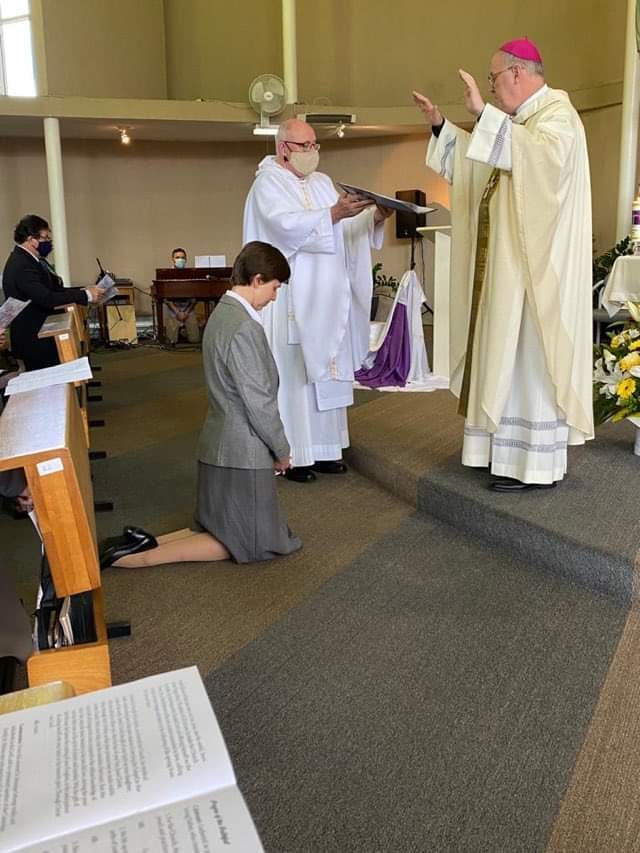
Sr Monique Singh, who recently made her final vow as a full member of the Canossian Daughters Of Charity in Oxley, once had her heart set on becoming a world-class ballerina. Everything changed when she realised she had a higher calling to serve God.
To Sr Monique, dancing was not just a dream. It was her first love. In fact, after high school, she studied dance full-time at a school in Sydney. The only daughter of Barbara and Graham Singh from Taree in New South Wales, Sr Monique once dreamed of traveling the world as a ballerina.
One day, whilst she was 16 years old, God spoke to her through a small book she was reading. It was at that moment when she first sensed a calling to religious life. At the time however, she could not picture how that would become a reality.
Eager to pursue her dream to dance, the young Monique moved to Brisbane to further her dance studies. Whilst studying choreography in a Brisbane university, she saw a flyer about a retreat organised by the Canossian Daughters of Charity.
Photo credit: Canossians Australia/Facebook
That’s when she met the Canossian Sisters, whose joy profoundly moved her. Even though she subsequently explored other orders, Sr Monique felt that with the Canossians, her heart was at home. Eventually, she felt torn between pursuing dance and staying in touch with the Sisters.
“I surrendered the desire to control and allowed the Spirit to gently guide me to new possibilities and opportunities for growth that were beyond all of my imaginings. I was amazed at the journey and how, in letting God take the lead in this dance of life, a new perspective of the world unfolded,” Sr Monique shared.
Photo credit: Canossians Australia/Facebook
At 27, she entered postulancy in the Philippines, where she studied with other young women discerning religious life. Then finally, in July 2021, she made her final vows inside the Canossa chapel in Oxley led by Bishop Ken Howell.
“It has been quite the adventure so far – and the journey is just beginning. I am so very grateful for the people who were placed on my path, as God’s instruments, to help light the way,” Sr Monique said.
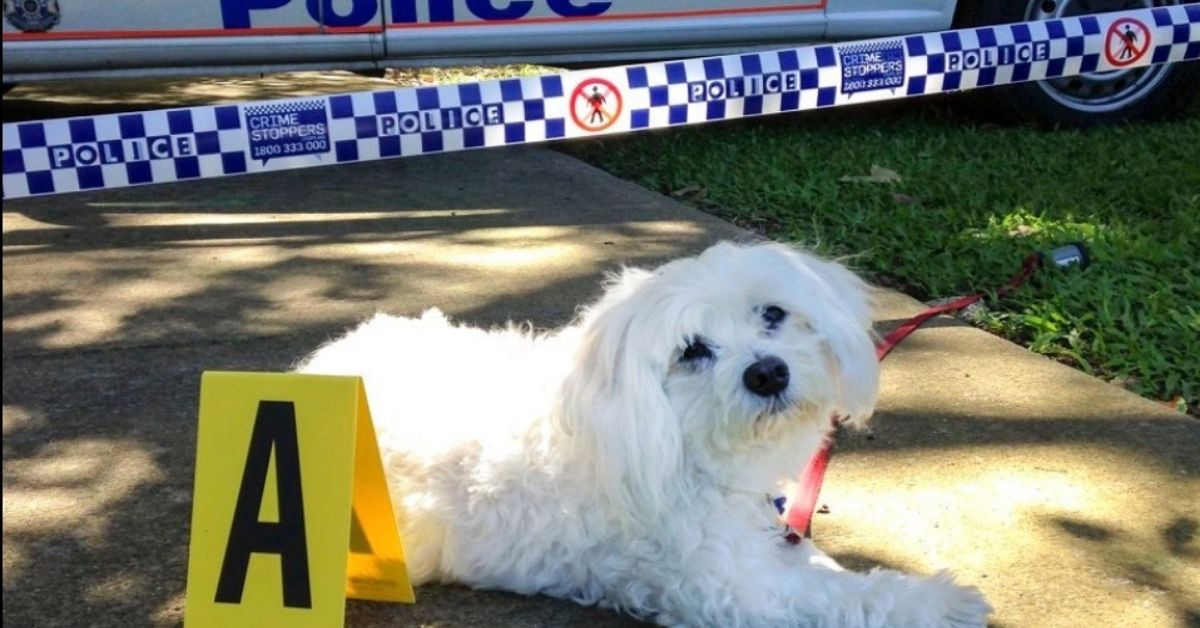
Faithful, well-trained dogs and horses deployed from Oxley to help fight crime and protect the community will have more protection following the proposal to establish new measures aimed at individuals who harm or kill these animals.
The State Government plans to create new laws that will make it a crime to injure or kill Police Dogs and Police Horses. If signed, the offence will be punishable by up to five years in prison.
The Queensland Police Service will also create a new meritorious service award for Police Dogs to recognise their hard work for the community.
“Queensland has some of the strongest laws in the nation in relation to dangerous sex offenders, Organised Crime and Outlaw Motorcycle Gangs and hoons,” Police Minister Mark Ryan said.
“Now we are moving to add another layer of support to the faithful servants, our Police Dogs and Police Horses, who help police do their critically important work.”
Queensland Police Union president Ian Leavers, alongside Acting Detective Senior Sergeant Guy Ford and Sergeant Kerrie Haines, was instrumental in the drive to create new laws for the animals’ protection. The Queensland Police Union also acknowledges the work of Sergeant Shayne Treasure, who helped develop the Police Dog meritorious service award.
Photo Credit: QPS
Police Commissioner Katarina Carroll supports this plan, knowing that these animals work as hard as their handlers and the police officers.
“The bond between a Police Dog and their handler is particularly special and together the crime-fighting partnership is extremely valuable to the entire Service,” Ms Carroll said.
“Anyone who tries to hurt our Police Dogs or Police Horses should, as the Queensland Police Union have proposed, be held accountable and face serious consequences.
“We are grateful for the commitment of the Queensland Police Union and the Government in pursuing the new offence to further protect our invaluable four-legged members of the Service.”
In the fight for peace and order, two impressive four-legged service dogs have become the pride of the Queensland Police Service Dog Squad in Oxley. Police Dog Etta is a young recruit with a bright future ahead of her and Police Dog Kaos is a heroic service dog who recently received a medal for bravery.
Police Dog Etta is the first tech detection dog, whose main role is to help QPS track down illegal activities by terrorists and paedophiles in investigations involving counter-terrorism and child abuse crimes.
She has been developing her ability to sniff out particular odours to find concealed hard drives, SIM cards, USBs, and other devices that police officers may overlook.
Highlights
Etta is the first tech detection dog for the Queensland Police Service Dog Squad.
She will help Taskforce Argos detect concealed tech devices in police operations.
Kaos received a medal for his bravery from the German Dog Shepherd Council of Australia.
He has recovered from the stabbing he incurred whilst chasing vehicle thieves.
The pup will work alongside Taskforce Argos and has been training under Sergeant Jaye Lilley. After a careful study, QPS officials said that they had a great need for tech detection service dogs and started training Etta, who could be ready for her first operation in September 2021.
Etta is part of the Dog Squad, where 103 service dogs have been proving to be QPS’ assets in finding dead bodies, assisting in rescue operations, and tracking down evidence in critical police work.
Meanwhile, Police Dog Kaos received the highest medal of honour for a German Shepherd from the German Shepherd Dog Council of Australia (GSDCA) for his heroic accomplishment. In February 2020, Kaos was seriously injured while in pursuit of vehicle thieves.
The experienced police dog was stabbed in the throat but showed no fear or weakness despite the injury. Kaos recovered from injuries a month after the horrible incident and was back on duty, patrolling the streets.
“We are pleased to award Kaos after his seven years of service with the Queensland Police Service,” Annie Tamblyn from GSDC said. “He is a dog that was both feared by criminals and loved by children, especially when he would visit them at the Queensland Children’s Hospital.”
Senior Constable Jim Griffiths, Kaos’ handler, accepted the award on the dog’s behalf.
“Our police dogs do amazing things every day, so I am honoured Kaos has had the opportunity to be recognised for what he did.”
Did you know that a new mobile police beat has rolled into Oxley to provide the community with more access to services like taking witness or victim statements, reports, and conducting field interviews?
The South Brisbane Mobile Police Beat, parked by the entrance of the Oxley Railway Station, will also be going around the community to provide more police presence. The set-up will allow the locals to comfortably talk to the authorities about their concerns for public safety and security, including issues on domestic and family violence.
Aside from Oxley, the service will also be visible around Corinda, Sherwood, Graceville, Rocklea, Chelmer, Tennyson and parts of Yeerongpilly, according to the Queensland Police Service (QPS).
“Mobile police beats are an agile solution to policing in the districts and we look forward to being able to provide a “station on wheels” to predetermined areas that we identify require a policing presence most,” Chief Superintendent Graham said.
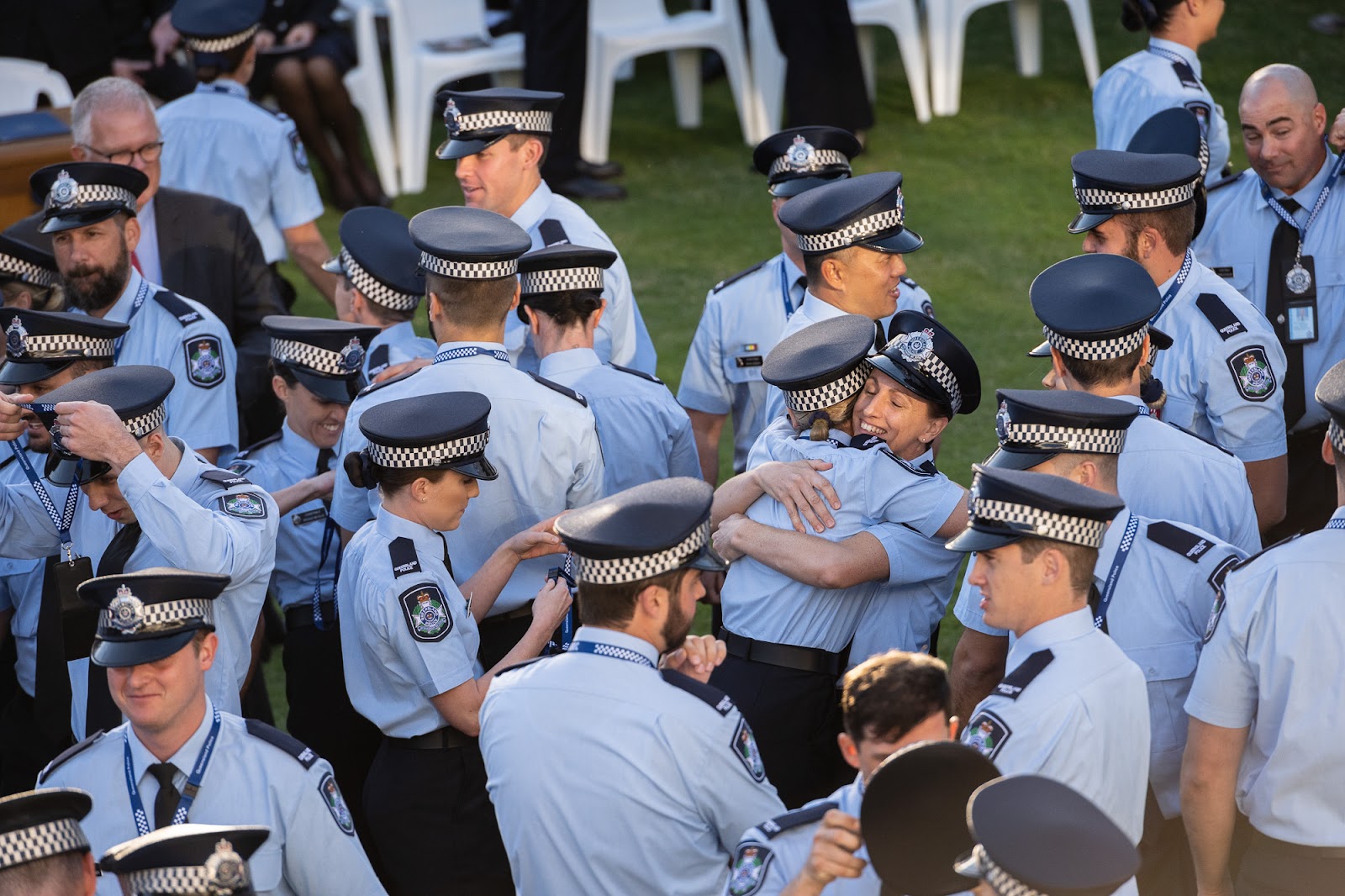
It comes the QPS recently welcomed 96 new officers, who were inducted as First Year Constables (FYC) at the Oxley Academy. They are the first graduates of the distance-based study option and received their deployment orders to serve various precincts across Queensland. They have also been issued their QLiTE devices to issue banning notices on the spot.
Photo Credit: QPS
As FYCs, the new officers will further undergo station-based training for 12 months to improve their abilities whilst immersed in actual police scenarios.
“These new FYCs are the future of policing in Queensland, and the training they have undertaken up to this point has prepared them for the variety of situations they will encounter throughout their policing careers,” Commissioner Katarina Carroll said.
“The ability to graduate with QLiTE devices will enable these officers to hit the ground running, being equipped with the tools are necessary to perform their new roles.
“We are always looking to deliver the latest technology available to our officers to give them the equipment required to provide a modern approach to crime prevention, community safety and all other aspects of police work.”
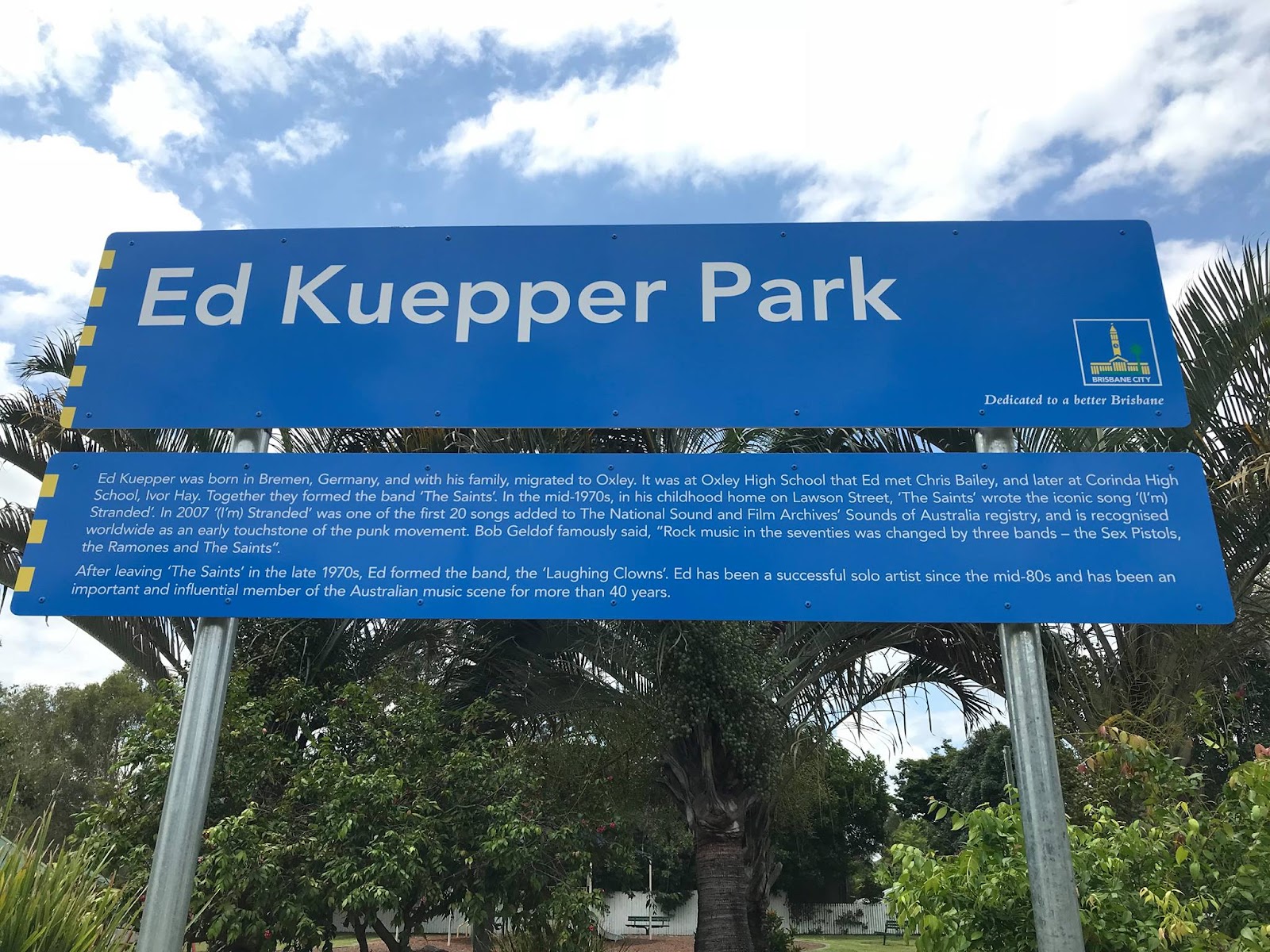
Oxley musician Ed Kuepper received a great honour from the community after a park on Lawson Street was named after him. Now, he’s campaigning for this site to become a tourist spot and hopes that more people will visit and promote the location.
The founder of the Brisbane band, The Saints, said that the Ed Kuepper Park should be “known by everyone” around the world as it is a magnificent green space. He also believes that locals should venture around their own neighbourhood to “understand” Brisbane’s cultural history better.
It comes as he celebrates his 45th year in the music business with a series of shows around Queensland. Mr Kuepper has had a couple of successful shows in early June 2021 at The Triffed and the Imperial Hotel. In August, he’s set to perform at the Tanks Art Centre in Cairns and another venue in the Gold Coast.
Photo Credit: DJ Jane Grigg/Facebook
Mr Kuepper, who was born in Germany and moved to Brisbane as a child with his family, founded The Saints with Chris Bailey and Ivor Hay in the 1970s and mostly rehearsed and wrote songs at the Kuepper family’s garage. They released three albums under EMI Records before disbanding in 1978.
The musician then formed The Laughing Clowns immediately after The Saints and then established ’90s grunge band, The Aints. Mr Kuepper has also thrived as a successful solo artist.
In 2017, some 800 locals signed the petition, spearheaded by Oxley resident Maurice Murphy, to name the park on Lawson Street after Mr Kuepper.
During the dedication of Ed Kuepper Park, the musician said that he has always loved it when people would point out to him where “certain things happened” and he appreciated seeing little plaques bearing the history of significant sites.