



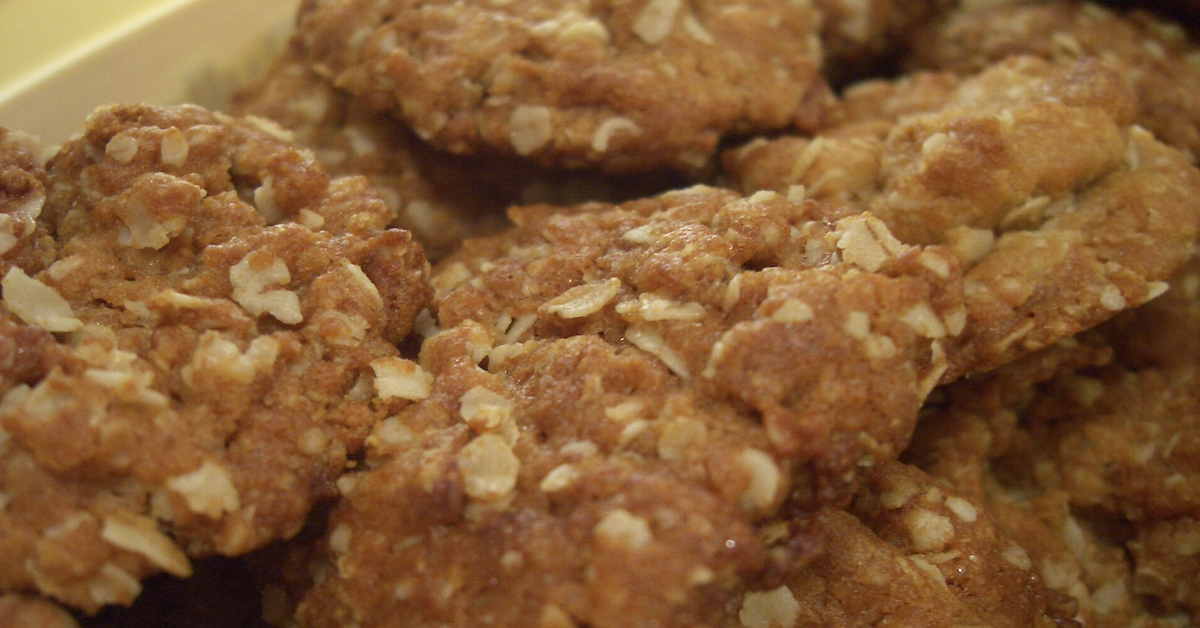
How Chelmer Found Its Place in the Anzac Biscuit Story

Before it became a national tradition, the Anzac biscuit passed through ordinary kitchens, including one in Chelmer, where a simple recipe would find its way into print.

It started with a line most people would miss — a set of initials and a suburb tucked at the end of a recipe. But for Chelmer, that small detail opens a door into a much larger story, one that connects a local kitchen to a biscuit known across Australia.


The clue appears in a recipe printed in the Sunday Mail on 26 June 1927. The ingredients are familiar: oats, golden syrup, butter, flour and coconut. It reads like a version many Australians would still recognise today. Then comes the final line — “E. G. (Chelmer.)” — placing the suburb into the history of the Anzac biscuit.
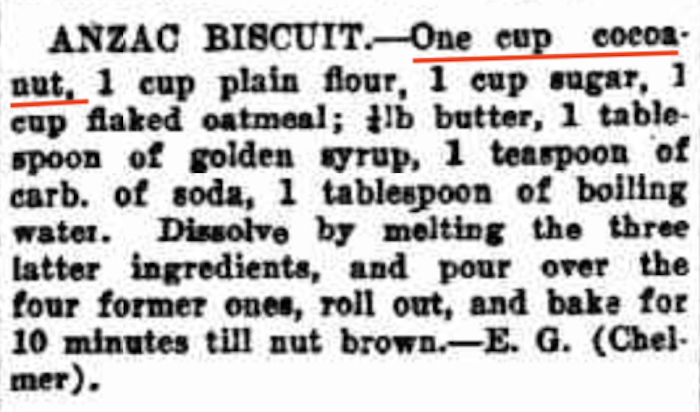
Photo Credit: National Library of Australia

A Recipe That Traveled Through Time

At first, the clipping seems like just another contribution to a newspaper cooking column. In the early 20th century, these pages were filled with recipes sent in by readers, often identified only by initials and their suburb. For many families, it was a way to share what worked in their own kitchens.

But the Anzac biscuit was already changing. Records show that by 1917, recipes using the name “Anzac biscuit” were appearing in print, though they looked quite different.
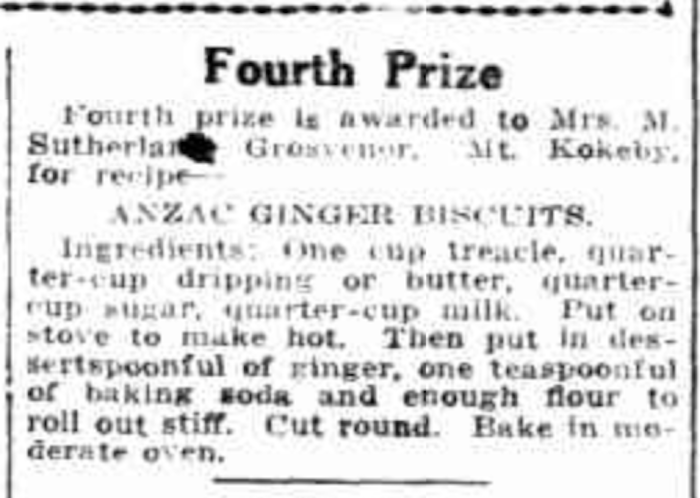
Photo Credit: National Library of Australia

Some included eggs and were served with fillings. Over the next few years, the recipe shifted. It became simpler, more practical, and closer to the version Australians know today.

By the 1920s, something new had been added: coconut. Recipes from this period show the biscuit settling into its modern form, compounded by the submission from a Chelmer reader. 

More Than a Recipe

The Anzac biscuit is not just a popular bake; it also carries legal protection. The Department of Veterans’ Affairs administers laws that protect the word “Anzac”, and commercial sellers need permission to use it. That is why businesses cannot simply rename any sweet biscuit an Anzac and put it on the shelf, preventing marketing gimmicks. 

Those rules also shape what can be sold as an Anzac biscuit. The product should not be called a “cookie” and should not stray too far from the traditional recipe and shape. There is some room for limited change, including versions made for dietary needs, but the biscuit still has to remain recognisable as an Anzac biscuit rather than a novelty spin on the original. 

In 2008, Subway removed its Anzac biscuit from sale after problems with compliance, then brought it back in 2025 as a limited-time item made to the traditional recipe. The return was backed by RSL Australia, with part of the sales directed to support veterans and their families. 
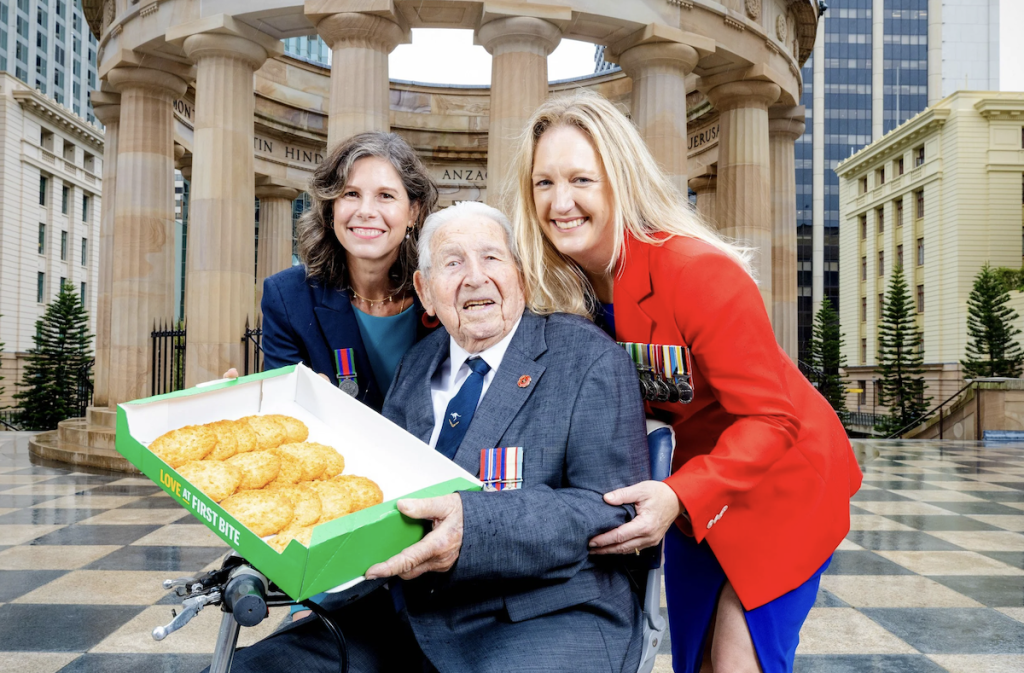
Photo Credit: RSL Australia

A Story Without a Single Beginning

There is no single place where the Anzac biscuit began. Instead, it took shape across the country, through small contributions like this one. By 1924, printed recipes including coconut were appearing everywhere. Each version added something, adjusted something, or passed the idea along.

The Chelmer connection is notable for its simplicity. It has no famous chef, official invention record, or grand narrative—just initials, a modest suburb, and a recipe shared in a local newspaper. Yet, this is how many beloved traditions begin, taking shape in everyday life.


Published 6-April-2026

Weemalla House In Corinda Stands As Symbol Of Brisbane’s Elite In The Early 20th Century

Step back in time to 1908, when Corinda was home to Brisbane’s wealthiest residents. At the heart of this history stands Weemalla, a meticulously designed residence that still embodies the elegance and craftsmanship of the era.


Built between 1908 and 1909, this heritage-listed home at 62 Ruthven Street remains largely unchanged, offering a direct link to the past in one of the city’s historically affluent suburbs. Designed by renowned architect Robin Dods, the residence reflects the distinctive approach of his work, blending functional Queensland housing with British Arts and Crafts influences.

The Evolution of Corinda and Its Elite Residents

During the late 19th and early 20th centuries, Corinda became a sought-after location for Brisbane’s upper class. The suburb’s elevated position and proximity to the river provided relief from the city’s noise and pollution, attracting successful business figures, pastoralists, and merchants. Among them was Robert Moore Steele, the first owner of Weemalla and Queensland’s manager for the Victoria Insurance Company Ltd.

Before settling in Corinda, Steele and his family lived in other middle-class suburbs like Toowong and Indooroopilly. In 1908, he acquired the land for Weemalla, commissioning Hall & Dods to design a home suitable for his growing family. The result was a low-set timber residence with generous verandahs and a carefully considered layout, characteristic of Dods’ work.

Architectural Significance and Design Excellence

Weemalla is a prime example of Robin Dods’ residential designs, which prioritised climate-responsive features and craftsmanship. His work drew inspiration from the British Arts and Crafts movement, favouring solid structures with wide porches, steeply pitched roofs, and well-proportioned forms. The home’s design incorporated natural ventilation, deep verandahs, and large windows to combat Brisbane’s subtropical heat.

The front facade, though appearing symmetrical, reveals a thoughtful asymmetry upon closer inspection. A central piazza and an entry hall with bay windows enhance airflow and natural light, while interior spaces balance formal and informal living areas. The home’s original materials and design choices were selected to develop a sense of permanence, allowing it to age gracefully over time.

Weemella House in Corinda
Photo Credit: Queensland Heritage Listing

Changes and Preservation Over the Years

Despite its long history, Weemalla has undergone only minor modifications since its construction. Ownership remained within the Steele family for decades before the house was sold in 1963. Subsequent owners preserved its key architectural elements, with changes including the enclosure of some verandahs, the addition of a carport, and the construction of a swimming pool. An extension in 1964, designed by Brisbane architects Job & Froud, introduced modernist influences while respecting the home’s original structure.

The property remains a private residence, a rare example of early 20th-century Brisbane architecture that has withstood the test of time. The Queensland Heritage Council recognises Weemalla’s historical and architectural importance, highlighting its role in shaping the region’s architectural identity.

Weemalla’s Place in Corinda’s History

Weemalla’s continued existence provides insight into the social and economic landscape of Brisbane in the early 1900s. It serves as a reminder of Corinda’s transformation from a sparsely populated suburb into a desirable location for the city’s elite. The home’s preservation allows locals and architecture enthusiasts to appreciate a period when craftsmanship and design were integral to residential construction.


While the modern Corinda landscape has changed significantly, Weemalla remains a visual and historical anchor to a bygone era. It tells the story of a suburb once favoured by Brisbane’s wealthiest residents and an architect whose influence helped shape Queensland’s built environment.

Originally Published 18-April-2018
Updated 25-February-2025

100 Years of Sherwood Arboretum: Brisbane’s First Arboretum Marks a Milestone

When 72 Queensland kauri pines were planted at Sherwood Arboretum in 1925, few could have imagined the thriving botanical haven it would become. Now, a century later, this 15-hectare green space is marking its milestone with a celebration honouring its past and future.


A Century of Growth and Conservation

Founded on 21 March 1925, Sherwood Arboretum was designed to preserve Australian native trees at a time when much of Brisbane’s natural landscape was being reshaped by urban expansion. The first trees planted—72 Queensland kauri pines—lined what is now known as Sir Matthew Nathan Avenue, named after the Queensland Governor at the time. These towering trees remain a defining feature of the arboretum today.

The project brought together some of Queensland’s most influential figures of the era. Among them was William Jolly, Brisbane’s first mayor, alongside Archbishop James Duhig, Romeo Lahey, a leading conservationist, and W.D. Francis, a rainforest expert. Their shared vision helped create what would become one of Brisbane’s most significant botanical reserves.

Sherwood Arboretum in the 1940s
Photo Credit: Friends of Sherwood Arboretum/Facebook

Sherwood Arboretum’s importance was officially recognised in 2007, when it was listed on the Queensland Heritage Register. This ensured that its collection of over 1,100 trees, representing 250 species, would continue to be protected for future generations.

More Than Just Trees: A Community Space

Beyond its scientific and historical significance, Sherwood Arboretum has long been a place for community gatherings, family outings, and quiet escapes into nature. Its facilities include walking tracks, picnic areas, barbecues, and a river boardwalk, making it a well-loved spot for locals.

Recent upgrades have made it even more inviting. A nature-inspired playground, nestled under large fig trees, has given children a space to explore while learning about native flora. Interpretive signs now guide visitors through different tree collections, showcasing highlights like the Rainforest, Fig Tree Grove, and Bottle Tree Knoll.

Sherwood Arboretum
Photo Credit: Friends of Sherwood Arboretum/Facebook

Centenary Celebrations on 23 March

To mark 100 years of Sherwood Arboretum, Brisbane residents are invited to a centenary picnic on Sunday, 23 March. The event will run from 2:00 p.m. to 5:00 p.m. and feature a historical photographic display, along with live music from the Mango Jam Big Band, bringing the sounds of the 1920s and 1930s back to the park.

Ahead of the picnic, a special tree planting ceremony will take place on Friday, 21 March. Lord Mayor Adrian Schrinner will join local students in planting trees along the Arbor Walk, continuing the arboretum’s legacy as a site for conservation and learning.

For those eager to explore the space, a free guided tree walk will be held at 9:30 a.m. on Sunday, 23 February. Bookings can be made through Eventbrite or by calling the Brisbane City Council’s Call Centre at 3403 8888.


Looking to the Future

Sherwood Arboretum’s journey over the past century reflects Brisbane’s deepening commitment to protecting native plant species. Thanks to the continued advocacy of Friends of Sherwood Arboretum (FOSA), the park remains a treasured green space for both scientific study and public enjoyment.

Published 12-February-2025