Christ the King Students Bake for a Cause as BCE Communities Share Christmas Kindness

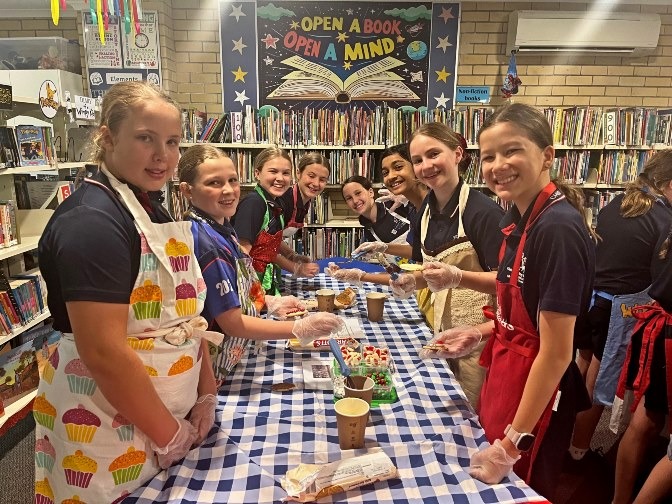
The Mini Vinnies team at Christ the King School in Graceville has been baking up kindness this festive season, making and selling home-made biscuits to raise funds for the St Vincent de Paul Christmas Appeal. The student-led effort is a simple, hands-on way for young people to contribute to others in need and to learn about community service.


Read: Historic Graceville Homes Sells for $1.8M after Stunning Renovation


Their biscuit drive comes amid a wider swell of generosity across Brisbane Catholic Education’s 146 schools. Staff and students are taking part in programs and activities that reflect the season’s focus on care, support, and connection.

Photo credit: Facebook/Christ the King School, Graceville

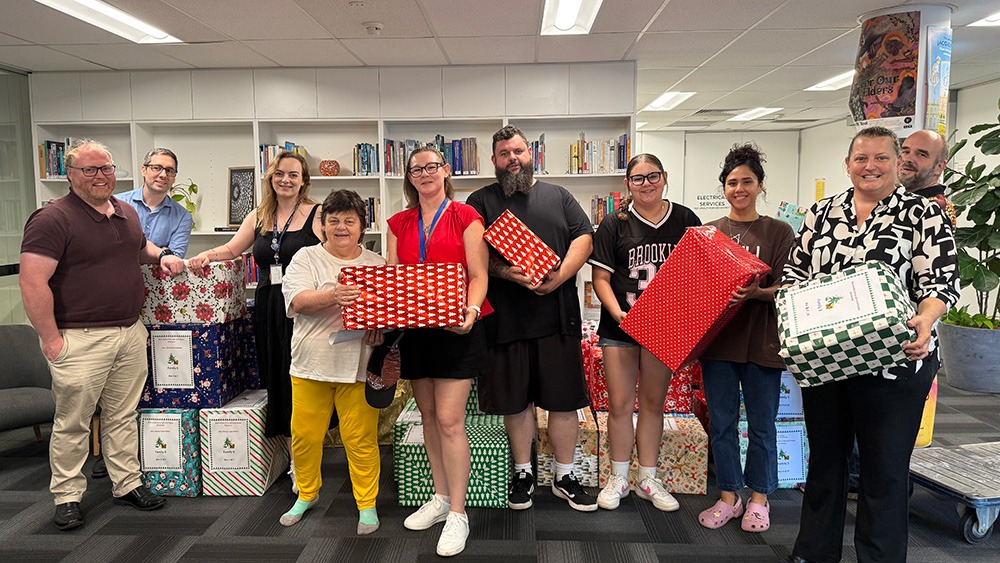
At BCE’s Woolloongabba office, staff again supported the long-running Adopt-a-Family initiative. Now in its 21st year, the program offers relief to families facing hardship, including unemployment, homelessness, family breakdown or those seeking asylum. This year the team prepared 91 wrapped boxes of gifts and non-perishable food items for 20 families. 

BCE’s Woolloongabba office (Photo supplied)

The program involves staff, program founder and former recipient Sue Treweek, Father Wally Dethlefs and Life Without Barriers National Immigration Services. Helen Hartwig, BCE Officer Services Team Leader, said the program builds hope and brings joy to those who need it most. Father Dethlefs and his helpers are delivering the boxes to families ahead of Christmas.

Students across BCE are also contributing in varied and practical ways. At Mt Maria College Petrie, pupils placed donations for the St Vincent de Paul Christmas Appeal beneath the school’s Giving Tree during a special Christmas liturgy. Jared Press, Assistant Principal Formation and Identity, said donations have grown for the second year running, and staff at the college raised more than $700 in food vouchers to support local families.

Prep classes at Mater Dei Catholic Primary School, Ashgrove West, brought the Nativity story to life for their school community, offering a straightforward retelling of the Christmas story that connected children, families and staff.

At St Ambrose’s Primary School, Newmarket, students returned for a third year to sing carols, do crafts and spend time with residents at Mercy Community Aged Care. The visits help students build meaningful intergenerational relationships while providing companionship and seasonal cheer to aged-care residents.

Photo credit: Facebook/Christ the King School, Graceville

Back in Graceville, Mini Vinnies members at Christ the King have turned baking into a charitable activity, selling biscuits with the proceeds donated to St Vincent de Paul. It is a small-scale enterprise with a clear purpose: to teach students that practical acts of service, whether a cake stall, a donation or a visit, can make a real difference for people doing it tough.


Read: Sherwood Guides Receive Facility Upgrade Grant


Across Brisbane, these coordinated efforts by BCE schools and staff demonstrate a focus on community and generosity. In the lead-up to Christmas, hampers are packed, trees become donation points and children practise giving — all simple actions that together send a message of care and solidarity.

Published 12-December-2025

Oxley Set for Immersive ‘Fawlty Towers’ Dining Experience

Oxley will host the “Fawlty Towers” The Dining Experience at Oxley Golf Club, offering an interactive mix of comedy and improvisation that has become a hallmark of the long-running show. The event is expected to draw interest from locals who enjoy theatre that brings the audience directly into the action rather than keeping the performance on a distant stage.


A Community Event with Returning Fans

The show has toured for 29 years and features an improvised format that keeps performers interacting closely with guests throughout the meal. The dining experience is produced by Interactive Theatre International, a company known for creating immersive, site-specific comedy shows that blend theatre and improvisation.

The company trains its actors to embody the series’s familiar personalities while adapting to unpredictable, real-time interactions, which is why the show is often described as mostly improvised. 

On 14 February 2026, attendees will enjoy a three-course meal while performers portray characters inspired by the original television series. These performances shift in real time due to the show’s improvised nature, giving Oxley audiences a version shaped in the moment.

The classic British sitcom “Fawlty Towers”  starred John Cleese and became known for its sharp humour and unforgettable characters. The live experience places guests in the middle of a recreated hotel dining room where performers take on the roles of Basil, Sybil and Manuel, bringing the sitcom’s chaotic charm into a real-world setting. 

Multiple sources describe the experience as the longest-running “Fawlty Towers”-inspired show in the world. Because the performance is largely improvised, no two shows are the same. This is an interactive experience that relies on audience involvement and a shifting timing that changes from moment to moment.

The format mixes scripted moments with spontaneous comedy, making every performance different while keeping the spirit of the original television series at its core.

What Guests Can Expect from the Oxley Golf Club

Details provided by the Oxley Golf Club and theatre listings state that the event includes a two-hour interactive comedy experience paired with a menu influenced by the 1970s era in which the original series was set. The ticket covers both the meal and the performance, with drinks available for purchase separately. 

Organisers also note that flash photography is not permitted during the show. Event pages explain that doors open 30 minutes before the show begins, giving guests time to arrive and settle before seating starts.


Published 9-Dec-2025

Tim Russell and Mark Taylor Made Retirement Living So Enjoyable, Their Parents Had to Move In

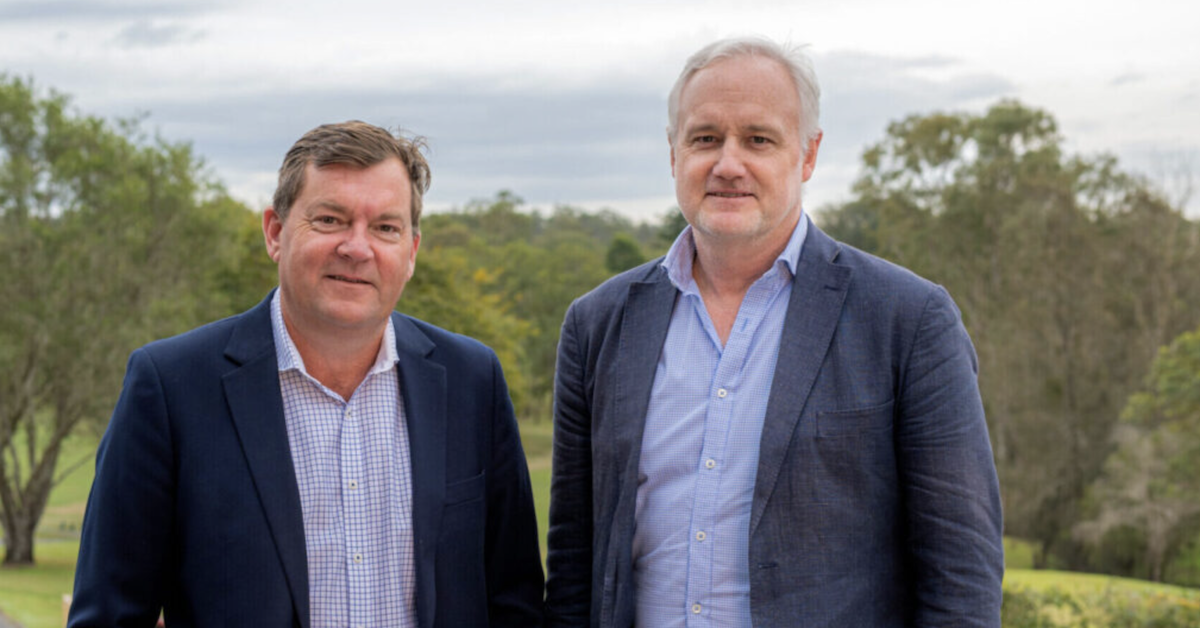
Retirement living has been evolving so rapidly across Brisbane that when two local entrepreneurs developed their vision for a new standard of luxury retirement in sought-after locations, their own parents insisted on moving in. When Tim Russell and Mark Taylor set out to reshape the living experience of people looking forward to their best years in retirement, they were responding to a clear shift in what older Australians wanted — connection, convenience, and the ability to stay in the area they know and love.

Drawing on decades of experience in the retirement sector, the pair founded Aura Holdings in 2016 with a belief that retirement living should feel modern, vibrant and socially connected. Instead of accepting the traditional model of large, broad acre developments, they focused on medium-rise, architect-led buildings in established suburbs — places where residents could downsize without disconnecting from the daily life of their neighbourhood.

The Founders’ View: Why Retirement Living Must Evolve


For Russell and Taylor, the future of retirement living is defined not by size but by purpose. They believe the next decade will favour smaller, boutique villages in established suburbs — places designed to support independence, access and connection rather than the isolation of large outer-suburban estates.

Their view reflects two fundamentals. Older Australians increasingly want proximity to transport, healthcare, shops and family, enabling them to stay active and engaged in the neighbourhoods they know. With home-care packages expanding, retirement villages have become ideal settings for supported independent living — provided operators partner with specialist care providers rather than try to replace aged care themselves.

Their guiding principle is simple: retirement living should widen life, not narrow it. That means apartments designed for independent living, thoughtful shared spaces, and communities where privacy and belonging can comfortably coexist — a philosophy they believe the sector must adopt to stay relevant.

Q&A WITH TIM RUSSELL


In a recent interview with Brisbane Suburbs Online News, Tim Russell expanded on these themes and reflected on the changes shaping the sector today. The following Q&A is based on that conversation.

What is the biggest misconception people under 60 have about modern retirement living?
There’s still a general lack of understanding about what retirement living actually is. Many people still confuse it with aged care, or imagine older-style brick-and-tile villages built decades ago. That’s simply not the reality anymore.

Are today’s retirees very different from those of previous generations?
People themselves aren’t dramatically different, but they are generally wealthier and expectations are much higher. Location, architectural quality and meaningful community spaces now matter just as much as the apartment itself.

Why are boutique vertical retirement communities becoming more common in inner suburbs?
Because that option didn’t exist until recently. As Brisbane has densified and land has become scarce, vertical projects have become the natural solution. They bring residents closer to transport, medical services and retail—all things harder to access in traditional suburban villages.

What triggers someone to finally decide it’s time to downsize?
Often a major life event: a health issue, losing a partner, or realising the home no longer works. Others want to return to Brisbane to be near family, or simply free up capital from the family home to maintain their lifestyle in retirement.

How is the industry adapting to the rise of home-care services?
Low-care aged care doesn’t really exist anymore. Government policy has moved strongly toward home-care packages, and retirement villages are ideally positioned to deliver them efficiently. Aura partners with specialist providers rather than trying to operate home care directly.

What features are in demand now that weren’t common a decade ago?
Health and wellbeing spaces, organised programs, warm and accessible community rooms, and high-quality food service partnerships. Residents appreciate convenience and quality—like taking a lift to the pool or ordering restaurant-quality meals delivered to their door.

How do you balance independence with opportunities for social connection?
Through intentional design. People gravitate to small, intimate spaces, not oversized halls. When you create the right kind of spaces, resident-led groups—Mahjong, cards, knitting, music, pétanque, book clubs—emerge naturally.

What feedback surprises you most from residents and families?
The most common line we hear is, “I should have done this five years ago.” Once people move in, they almost always see a positive lifestyle change.

Why hasn’t public perception caught up with the reality of retirement living?
The sector hasn’t told its story well. Many still associate “retirement” with institutional care, even though modern villages are vibrant, connected and focused on lifestyle rather than dependence.

What changes do you expect over the next 10–15 years?
We’ll see far more smaller-scale villages—perhaps 12 to 20 apartments—with highly personalised services, concierge support and a boutique feel. Large 300-unit villages will become increasingly rare as land becomes more constrained.

From Litchfield to Radcliffe: A Village Built Over a Decade

Kingsford Terrace – Litchfield Photo Credit: DMAEngineers

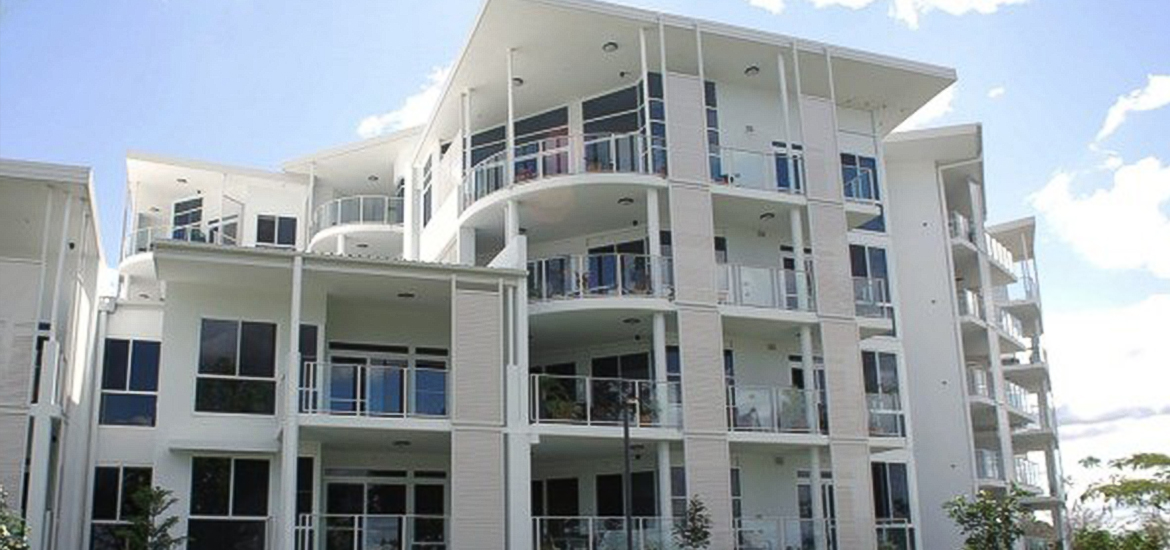
Kingsford Terrace Corinda is Aura’s philosophy expressed in bricks and mortar. When the founders acquired the site in 2016, only one building existed: Litchfield, a traditional first stage inherited from the previous operator. Instead of treating it as a constraint, Russell and Taylor used it as a foundation to reimagine the entire precinct.

Over the next ten years, they delivered six additional buildings, each one refining the village’s character and bringing it closer to their vision of a modern, connected retirement community. The final stage, Radcliffe, reached practical completion in late 2025, completing the village’s architectural identity. Designed with resident habits in mind, Radcliffe adds intimate community spaces and contemporary apartment layouts – small but meaningful enhancements that respond to how people actually live.

Kingsford Terrace – Radcliffe
Photo Credit: Aura Holdings

For long-standing residents, Radcliffe’s completion feels like the closing chapter and the start of a new story. For Aura’s founders, the completion of Kingsford Terrace is proof of their commitment to long-term management and to building communities that evolve with the people who call them home.

Photo Credit: Aura Holdings

As Brisbane continues to grow and transform, the Aura model offers a glimpse of what retirement living can become: community focused, architecturally designed, and grounded in the idea that ageing well is as much about community as it is about care.

A short video shared recently on Aura’s LinkedIn page captures this story visually. Shot at Kingsford Terrace to mark Litchfield’s ten-year anniversary, it shows both founders reflecting side-by-side on the early days—acquiring the site, planning a long-term transformation, working alongside residents through the build, and now seeing the final building open. The message is clear: Aura is not a developer that leaves when the concrete cures; it is an operator that remains embedded in the community for its entire lifecycle.

This philosophy extends across their portfolio. Aura’s directors are known to residents by name, attend community events, walk their sites regularly and maintain direct relationships with the people who live in their villages.

Photo Credit: Aura Holdings

Their model of partnering with specialist home-care providers, investing in health and wellbeing spaces, designing intimate community rooms and ensuring premium amenities reflects a resident-first mindset rather than a profit-maximisation one.

A New Model for Ageing in Place


Tim Russell and Mark Taylor have spent years working to build communities they would be comfortable having their own families live in. With their parents and siblings already living in multiple Aura villages, most would say they’ve succeeded. Their blend of commercial discipline, personal connection, and resident-first design is positioning Aura as one of the most forward-thinking operators in modern Australian retirement living.

As Australia reconsiders how people want to age, Aura’s founders appear determined to help shape that conversation from the front.


This feature on the directors of Aura Holdings is part of a series of Thought Leadership pieces, designed to look into areas of our society and how the future will unfold in them.

Featured Image Credit: Aura Holdings

Olympic School Project Delays Impact Glenala State High School in Durack

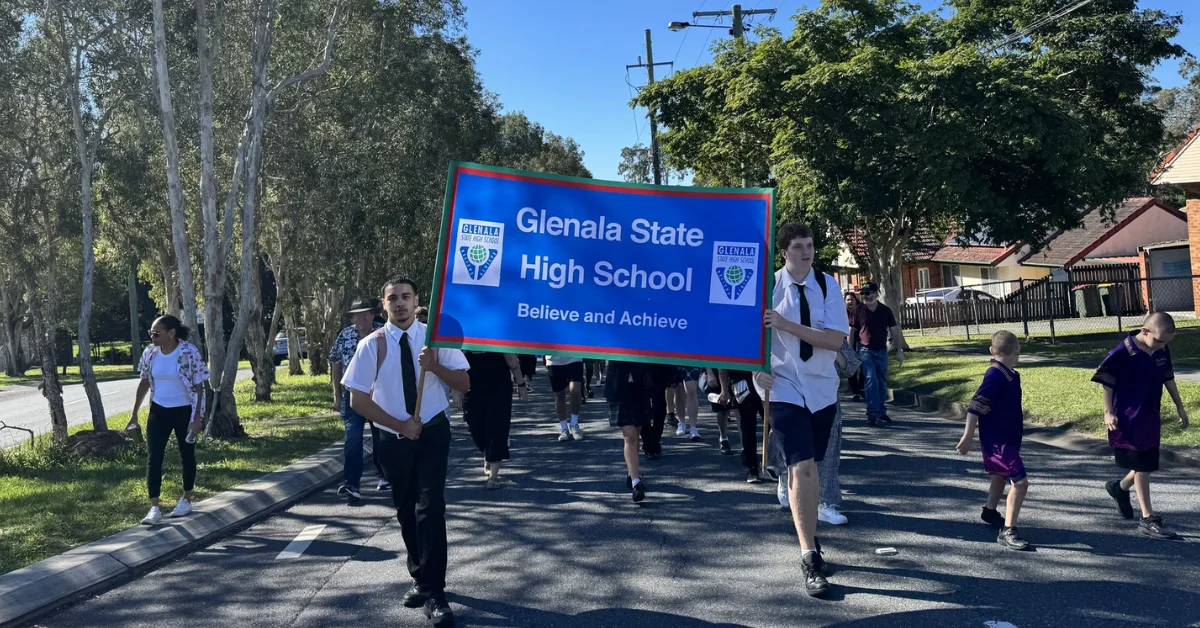
Delays in the Go for Gold school infrastructure program have directly affected Glenala State High School in Durack, where major sports upgrades scheduled for completion in 2025 have not yet begun.


Background of the Delays in Durack

Glenala State High School in Durack is one of six schools awarded Category 3 funding through the Go for Gold program in July 2024. These projects, valued between $2.5 million and $5 million, were intended to be completed by December 2025. By late 2025, none of the Category 3 projects had commenced.

Go for Gold delays
Photo Credit: Glenala SHS/Facebook

Revised Timelines for Glenala’s Project

The Education Department expects construction on all Category 3 projects to begin in early 2026, with completion now projected for the end of 2026. Glenala’s planned upgrade includes covered outdoor multipurpose courts designed to expand training spaces for the school’s netball program.

Category 3 Schools Affected Across Queensland

The delay affects six schools in total: Aitkenvale State School, Bentley Park College, Cairns West State School, Glenala State High School, Tagai State College’s Thursday Island Secondary Campus and White Rock State School. These projects were intended to support school sports participation ahead of the Brisbane 2032 Olympic and Paralympic Games.

Durack’s Additional Link Through Round 1 Funding

Durack is also connected to the program through Durack State School, which received Round 1 sports equipment funding. Round 1, announced in May 2023, offered grants of up to $5,000 for equipment and was not part of the delayed construction works.

Glenala State High School
Photo Credit: Glenala SHS/Facebook

Explanation of the Program Structure

The Go for Gold Fund forms part of a four-year commitment supporting school sports and physical activity across Queensland. Round 2 distributed funding for infrastructure projects in three categories, with Category 3 representing the highest tier at up to $5 million. None of the Category 3 projects reached the original December 2025 completion date.

Impact on Durack and Its School Community

Glenala State High School in Durack remains without the planned facilities intended to support student training opportunities, including its netball excellence program. The revised schedule places completion at the end of 2026.

Next Steps for Glenala and Other Category 3 Schools


Category 3 schools are expected to progress to construction during 2026, subject to weather conditions, market capacity and construction schedules. No further updates relating specifically to Glenala or Durack are provided in the available program information.

Published 28-Nov-2025

Strong Natural Olympia Showing for Oxley Fitness 24/7 Owners

Local owners of Oxley Fitness 24/7 travelled from Oxley to Las Vegas to compete at the Natural Olympia, where Michael Waddington recorded a professional bodybuilding win and Natalie Williams secured second place in the women’s professional division.


A Gym Led by Local Competitors in Oxley

Oxley Fitness 24/7 is operated by residents from Oxley and Forest Lake, with Michael and Natalie managing the gym since an ownership change announced 69 weeks ago. Their introduction to members at the time outlined new communication channels and foreshadowed operational updates.

Building a Training Base While Competing

Alongside their work running the gym, both continue to train clients locally while preparing for natural bodybuilding events. Their long involvement in the sport forms a key part of how they present the gym’s direction and training culture.

Professional Placements on the Las Vegas Stage

Michael and Natalie travelled to Las Vegas to compete at the Natural Olympia, an event involving participants from more than 60 countries. Michael achieved a professional bodybuilding win in PRO Men’s Bodybuilding. Natalie secured second place in the professional women’s division.

Community Acknowledgement of Their Results

Oxley Fitness 24/7 posted the outcomes on its social media pages, and supporters shared messages congratulating the pair. Comments across the posts highlighted recognition of their work and their continued involvement in the sport.

Consistency Behind Michael’s Return to the Stage

Michael shared that his decades in the sport underpin his preparation, emphasising the importance of consistency, long-term involvement and staying focused on competitive goals.

Natural Olympia Oxley
Photo Credit: Michael Waddington/Instagram

Natalie’s Acknowledgement of Support Networks

Natalie reflected on the role her family plays in her journey and her partnership with Michael, noting their shared work in running the gym while managing competition schedules. Her post emphasised the discipline and resilience required in the sport.

Natalie Williams
Photo Credit: Natalie Louise/Facebook

Positive Local Response Across Platforms

Supporters responded across multiple posts from Oxley Fitness 24/7 and the athletes’ individual accounts. Messages consistently recognised their achievements and the effort behind balancing training, competition and gym operations.

Continued Local Presence After Competition


With both athletes returning from the Natural Olympia with strong results, Oxley Fitness 24/7 continues operating under Michael and Natalie, who remain active as competitors and local fitness operators.

Published 26-Nov-2025

Flood Design Strategies Demonstrated in Sherwood

A Sherwood couple has completed a riverfront home designed for major flood events after repeated inundation on their long-held family block.


Background of Flooding and Site History

The Brisbane River has risen over the Sherwood property in several major events, including the floods of 1974, 2011 and 2022. The original home was affected in 2011, and the land was again inundated in 2022. During that 2022 event, a long stretch of the riverbank collapsed, causing parts of the block to sink by up to a metre. This resulted in earlier building approvals being withdrawn and required a complete redesign.

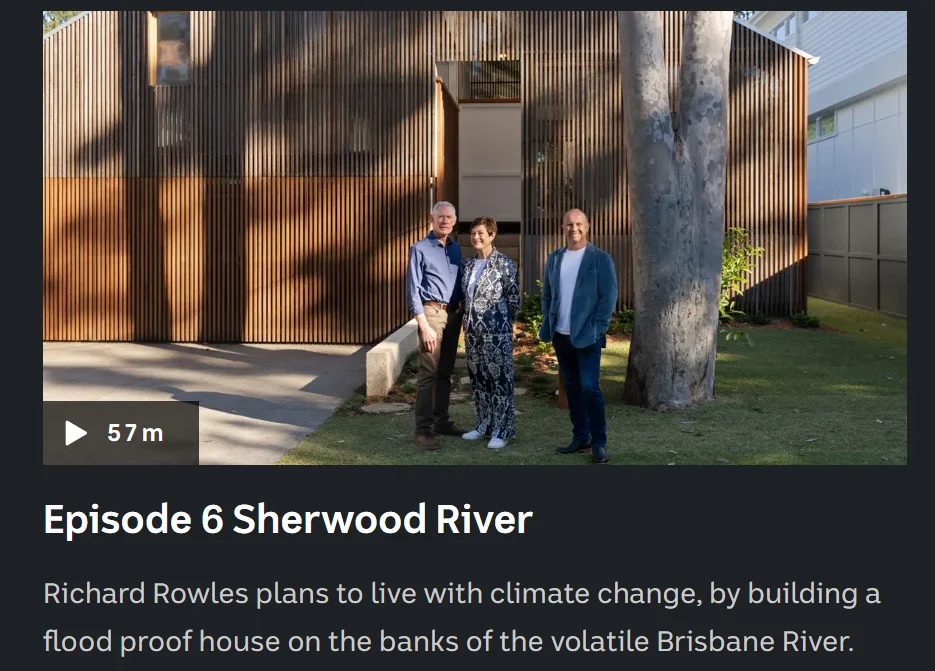
Richard and Janette Rowles returned to the Sherwood property after inheriting it in 2015. The couple had lived nearby for many years before deciding to rebuild on the riverfront despite its flood history.

Sherwood flood resilience
Photo Caption: A still from “Sherwood River,” capturing Richard Rowles and the team. Watch the full episode on Grand Designs Australia.
Photo Credit: ABC iview

Flood-Resilient Construction in Sherwood

The build took nearly two and a half years and cost more than $2 million. The new structure sits 11 metres from the river and almost half a metre above the council’s assessed flood level. It is supported by 26 piers embedded 13.5 metres into the ground, a measure intended to limit movement in any future landslip.

The lower level was intentionally designed to be submersible, with raised electrical points and switches. Living spaces were built on the upper floor, using water-resistant materials such as removable melamine wall panels, epoxy-painted steel framing and ironbark floorboards. A concrete staircase links the undercroft to a central courtyard and upper rooms.

Expert Insights and Design Principles

Flood-resilience specialist James Davidson notes that while the Sherwood example is a high-cost project, the principles applied can be used for new builds or retrofits at lower budgets. He highlights measures such as identifying projected flood levels, raising homes where possible, using resilient materials and positioning services above likely flood points.

He also recommends avoiding cavity construction, using concrete and tiled surfaces, treating pine framing and removing plasterboard in high-risk areas. He maintains that no house can be fully flood-proof, but these steps can reduce damage and recovery time.

Brisbane River
Photo Caption: A map showing the boundaries of Sherwood beside the Brisbane River.
Photo Credit: Wikipedia

Community Perspectives and Comparisons

Online discussion has shown mixed responses, with some residents pointing to similar raised designs and hose-out ground levels used in other flood-affected regions. Others reference the wide variation in past flood heights and the limits of designing for extreme events. Some discussions also mention floating structures and high-stilt housing as alternative approaches.

Future Implications for Riverfront Living


Although the Sherwood home incorporates extensive flood-resilience measures, expert commentary notes that increasing flood levels will continue to shape building decisions along the river. Some specialists indicate that relocating away from high-risk areas remains the only complete safeguard, though many homeowners are instead adopting resilience-based strategies.

Published 24-Nov-2025

PTSD Advocate from Corinda Featured Among Queensland’s 2026 Award Nominees

A Corinda resident has been recognised as a 2026 Queensland Senior Australian of the Year nominee for his long-standing work supporting current and former frontline personnel living with post-traumatic stress disorder.


Corinda Community Figure Acknowledged in Statewide Honours

Corinda’s Gerald “Gerry” Garard was named a 2026 Queensland Senior Australian of the Year nominee for his contribution to PTSD recovery programs. His nomination placed him among 18 Queenslanders recognised across four categories in the lead-up to the state announcements.

Background on the 2026 Queensland Nominee List

Queensland’s nominees were released in late October 2025, highlighting individuals working in health, education, mental health support, community services, environmental conservation and multicultural advocacy. Gerry’s nomination represented Corinda on the statewide list.

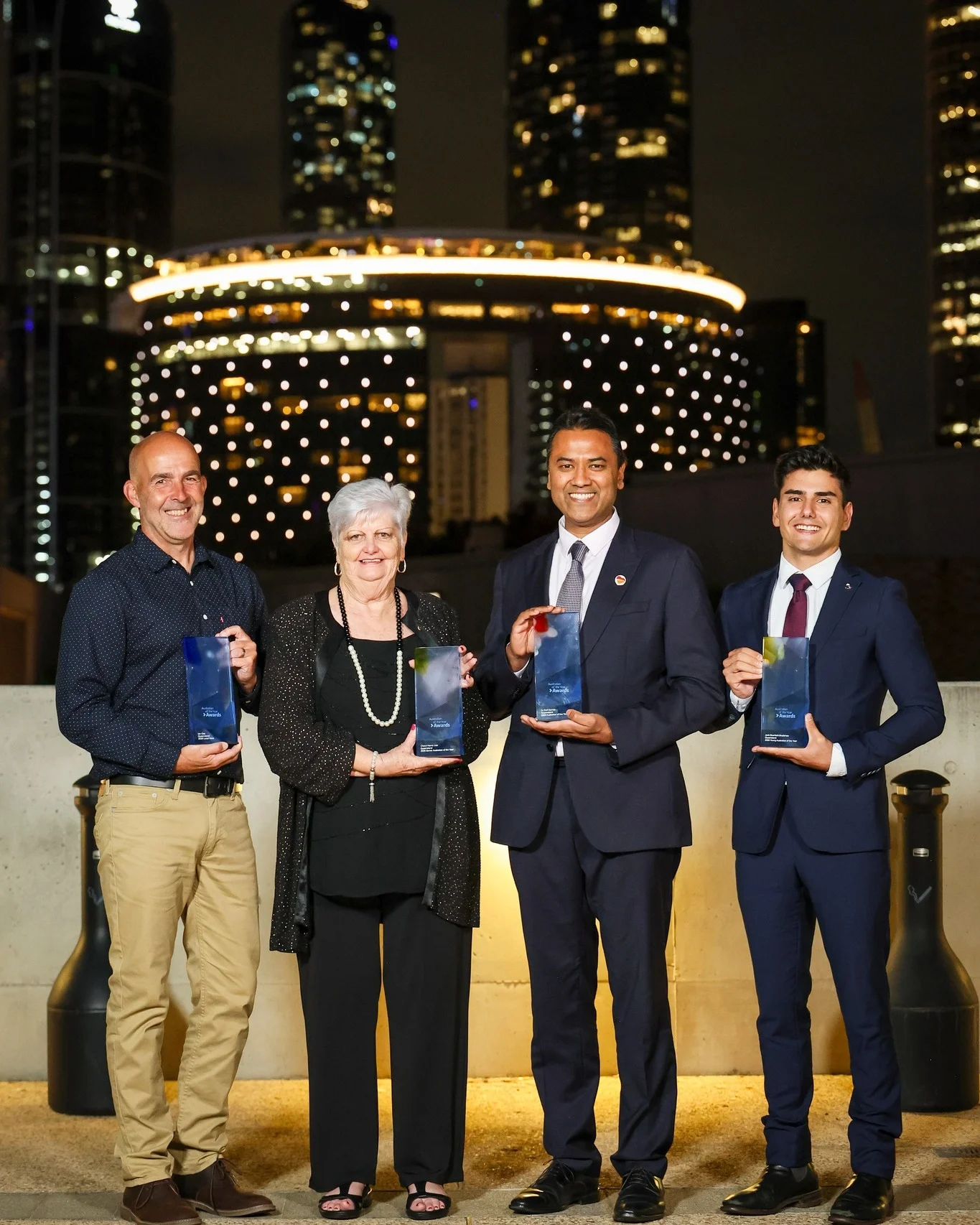
The official Queensland recipients were revealed on 12 November 2025 at the Brisbane Convention and Exhibition Centre. The Senior Australian of the Year title was awarded to Cheryl Harris OAM, while Gerry remained one of the recognised nominees for his ongoing work.

Photo Credit: Australian of The Year

PTSD Support Driven by Long-Term Service

Gerry’s nomination reflects decades of involvement in community support initiatives. He co-founded the 4 Aussie Heroes Foundation, which assists members of the military, police, fire, emergency and correctional services experiencing PTSD or related mental health challenges.

The foundation runs 11-day Triumph over Trauma residential programs designed to support participants and their families. A major project led by Gerry was the development of Camp Courage, a permanent rural retreat built through more than $7 million in raised funds. He also oversaw the project management of the facility.

Gerry joined other Queensland Senior Australian of the Year nominees from the Sunshine Coast, Gold Coast and West End. His inclusion ensured Corinda was represented in this year’s awards, reflecting community contributions shaped by long-term service.

Final Queensland Recipients Announced

Winners move forward to national honours

Although Gerry did not receive the Senior Australian of the Year title, the statewide announcement confirmed the following recipients:

  • Australian of the Year: Dr Rolf Gomes
  • Senior Australian of the Year: Cheryl Harris OAM
  • Young Australian of the Year: Jarib Branfield-Bradshaw
  • Local Hero: Ian Gay

These recipients will represent Queensland at the national awards in Canberra on 25 January 2026.

Queensland awards
Photo Credit: QLD Gov/Facebook

Continued Recognition for Community Impact


Gerry’s nomination remains part of the broader acknowledgement of Queenslanders contributing to community wellbeing, frontline support, inclusion and social improvement. His work in PTSD recovery continues to place Corinda among the suburbs recognised in the 2026 Australian of the Year program.

Published 14-Nov-2025

Rightsizing, Not Downsizing: Finding More Life in Just the Right Space at Somerset Indooroopilly 

With average life expectancy now stretching into the mid-80s, many Australians are realising that the family home—once a symbol of success—can quietly become a source of work and worry.

Nearly three-quarters of over-75s still live in houses larger than they need, while about 30 per cent are considering a move that fits their lifestyle today rather than the one they built decades ago.

Those themes will be be at the heart of Coffee & Conversations on 12 November 2025, where locals can hear about Somerset Indooroopilly—a new village that allows locals to downsize in the area they know and love.

Photo Credit: Somerset Indooroopilly

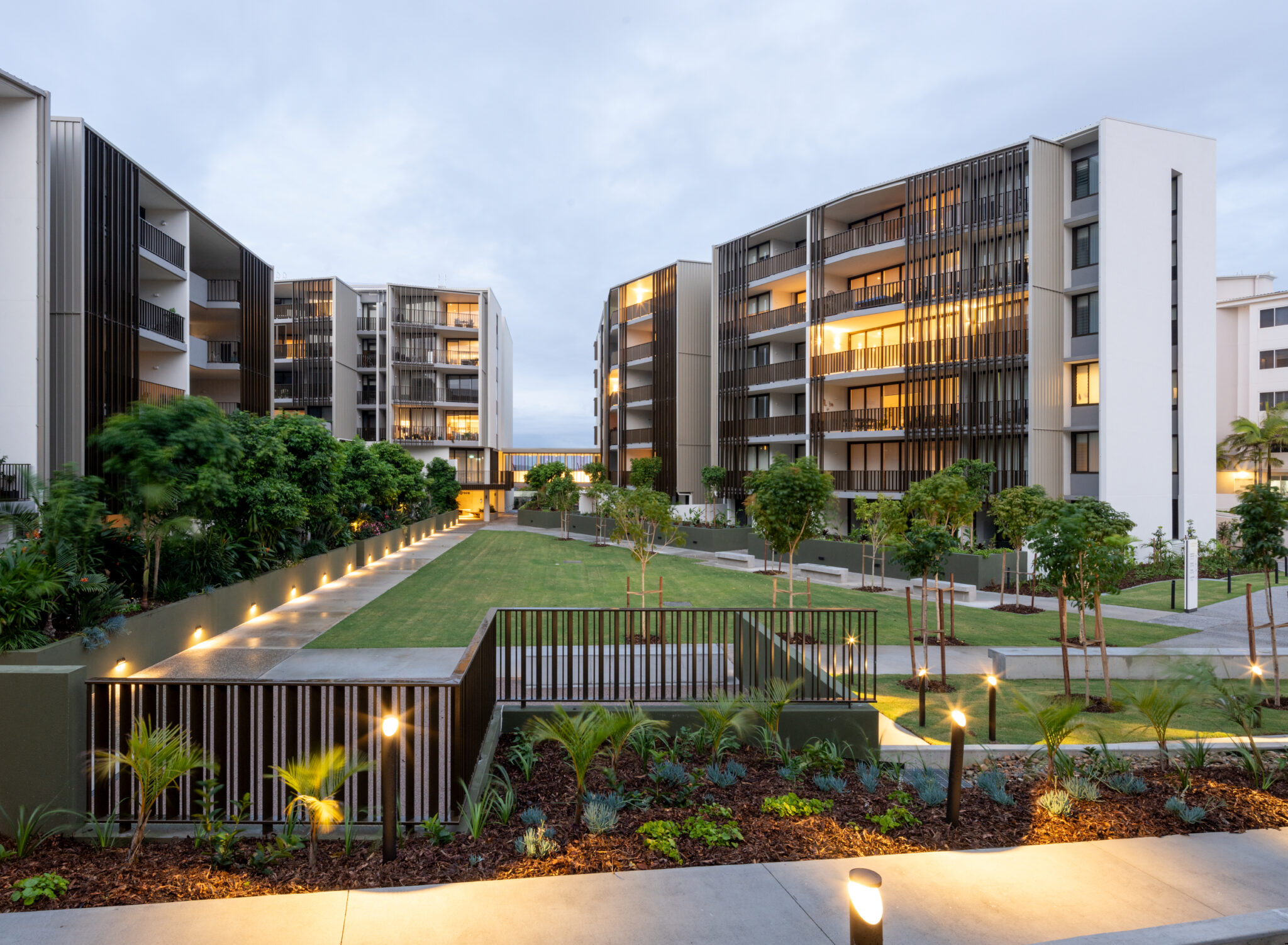
Set beside the Indooroopilly Golf Club, Somerset is a series of light-filled apartments around shared gardens, terraces and a café rather than cul-de-sacs and fences. The aim is to make life simpler without making it smaller.

Designed by Cox Architecture and built by Woollam Constructions, the whole complex is shaped around the concept of rightsizing: a lifestyle that trades maintenance for meaning, routine for connection, and isolation for ease.

Photo Credit: Aura Holdings

The shift speaks to a broader cultural change. Retirement communities are no longer seen as endpoints but as extensions of an active life. Research shows residents in such settings are physically healthier, more socially engaged and report higher overall happiness than those ageing alone. It’s less about giving things up than gaining back time—the chance to travel, volunteer or just enjoy an unhurried morning coffee.

Research shows that residents of well-designed retirement villages are more active, more socially engaged and less likely to need hospital care than peers who continue living alone.

People living in retirement communities can experience a reduction in patterns of hospitalisations, have the potential to reduced need for GP visits, and can stay healthy living independently.

RLC Report Better Housing for Better Health

Increasingly, people are choosing communities that give them freedom and flexibility, not just a smaller footprint. In practice, that means more time spent walking, reading, travelling—or simply enjoying a catch-up with friends—without the endless to-do list that comes with a large property.

At Somerset, that philosophy is built into everyday life, capturing that balance through thoughtful design. Apartments open onto gardens and shared terraces; the café hums with conversation; and facilities like the pool, gym, and library encourage activity without pressure.

Photo Credit: Aura Holdings
Each home includes a 24-hour monitored EEVI system for peace of mind, while a Village Manager and Wellness Advisor ensure help is close by but never intrusive. “Knowing the place is managed, looked after and secure—that’s a big factor,” one resident said. “It’s lovely knowing you’re in a safe area, surrounded by good people.”

The community is pet-friendly, the gardens maintained, and the atmosphere quietly sociable. “Moving here gave me freedom,” said another resident. “I can just close the door and go.”

For many, that’s the essence of rightsizing—choosing a space that fits this stage of life as comfortably as the last one did. “When you make the choice sooner rather than later, you give yourself the gift of freedom and the chance to enjoy more of what matters,” Aura Director Mark Taylor said at a recent Somerset event.

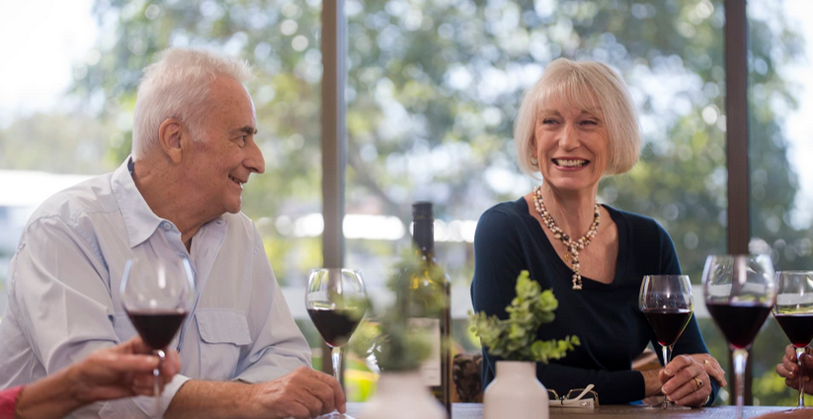
Pictured (L-R) Somerset Residents: Elsie, Ross, Elaine and Iris Photo Credit: Aura Holdings

And for anyone curious, participating in Coffee & Conversations on 12 November 2025 offers the simplest introduction: a walk through the gardens, a cup of coffee, and a conversation about how less maintenance can make room for more living.

Aura Holdings is a Proud Promotional Partner of Brisbane Suburbs Online News
Published 6-November-2025

Sherwood Road Level Crossing: Long Downtimes Add to Brisbane West Traffic Congestion

Commuters and local drivers in Sherwood are frequently facing long waits at the level crossing on Sherwood Road. Extended boom gate closures during weekday mornings are contributing to congestion on local roads, with queues sometimes stretching into nearby streets and affecting travel across the suburb.


Read: Push to Reopen Tennyson Rail Line Ahead of Brisbane 2032 Olympics


Recent Queensland Rail data shows Sherwood Road’s level crossing recorded an average closure of 1 hour and 44 minutes between 5 am and 10 am on weekdays, making it the second-longest downtime of the 50 crossings monitored in south-east Queensland. Across the network, 26 crossings were closed for more than an hour on average during the morning peak, up from 13 in 2022. This reflects a broader trend of increasing train frequency and longer dwell times on the rail network.
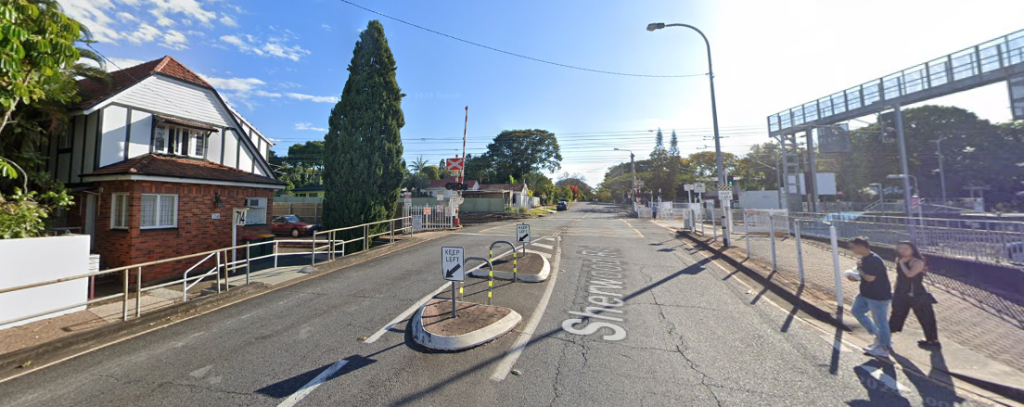
Photo credit: Google Street View

The long closures affect not just motorists but also local traffic patterns. Peak hour delays at the boom gates can cause queues along Sherwood Road and on feeder streets, while local buses may also experience hold-ups. Residents have noted the effect on daily routines, including the timing of commutes and access to services.

Queensland Rail attributes these longer closures to a combination of factors. More trains are now operating on the suburban network, including additional passenger services and freight, while station dwell times have increased due to growing patronage and accessibility support. These operational factors extend the duration the boom gates remain lowered.

Photo credit: Google Street View

Experts in transport and urban planning note that extended level crossing downtimes can worsen traffic congestion in surrounding areas. When gates remain down for a significant portion of peak periods, the delays affect not only motorists but also pedestrians, cyclists, and local public transport services.

Queensland has identified 13 level crossings across south-east Queensland for removal or upgrades to improve safety and reduce congestion. While it is not confirmed whether Sherwood Road is included in these short-term projects, the wider initiative aims to address the cumulative effects of frequent and prolonged boom gate closures on local communities.


Read: Residents Say Oxley & Inala Car Parks Among Brisbane’s Most Stressful


Until upgrades or removals occur, commuters using Sherwood Road are encouraged to allow extra travel time, plan alternate routes where possible, and factor in potential delays caused by peak hour train crossings. The intersection of local roads and rail infrastructure remains a persistent source of congestion in the western suburbs of Brisbane.

Published 24-October-2025

After More Than 100 Years, Graceville Croquet Club Continues to Thrive

Did you know that Graceville Croquet Club was established in March 1919, at a time when a number of returned servicemen from the First World War settled in the area and their wives were looking for their own sporting activities?

Graceville Croquet Club is a small sporting club dedicated to croquet, a low-impact and social sport that involves hitting wooden or plastic balls with a mallet through hoops.

The first members of the club, consisting of 12 women, played the game in their lawns. This set-up continued until 1920, when they were given a lease of the piece of land at Graceville Memorial Park.

Graceville Memorial Park circa 1930 (Photo credit: Brisbane John Oxley Library, State Library of Queensland)

The club’s first Patron was Thomas Murray Hall, a former member of the Queensland Legislative Council and alderman of the Brisbane City Council, who was known as a big supporter of numerous varied social activities and sports in the Sherwood Shire.


Read: Graceville Croquet Club Is 100 Years Old!


Until 1923, the three lawns remained as rough grass and the clubhouse was constructed between 1924 and 1929.

The club only consisted of women until the 1950s, when men also became enthralled with the sport.

The Graceville Croquet Club was added to the Register of Significant Places in the  National Trust of Queensland in 2005.

Graceville Croquet Club
Photo credit: Moira Dixon/Google Maps

At Graceville Croquet Club, games are played in three disciplines: association croquet, golf croquet, and ricochet croquet.

Association croquet is  the traditional form of the game but golf croquet is more popular because  of its less simpler rules compared to the former. Ricochet, on the other hand, is said to be a fast and fun way for beginners to learn about the game.

The club underwent refurbishment in 2018 due to Council grant, providing new facilities for the kitchen as well as wheelchair access. This was just in time for their 100th year celebration in 2019.

Today, the club’s patrons are Councillor for Tennyson Ward Nicole Johnston, State Member for Miller and Transport/Main Roads Minister Mark Bailey, and Federal Member for Moreton Graham Perrett MP.

Still thriving up to this day, the club warmly welcomes new members and visitors who are interested in learning to play croquet. Their clubhouse can also be hired for events. For more information about the club, visit their website at gracevillecroquetbrisbane.com.au.

Graceville Croquet Club is located at 53A Appel St, Chelmer, near the Graceville Railway Station and the bus stop.

Updated 30-October-2025