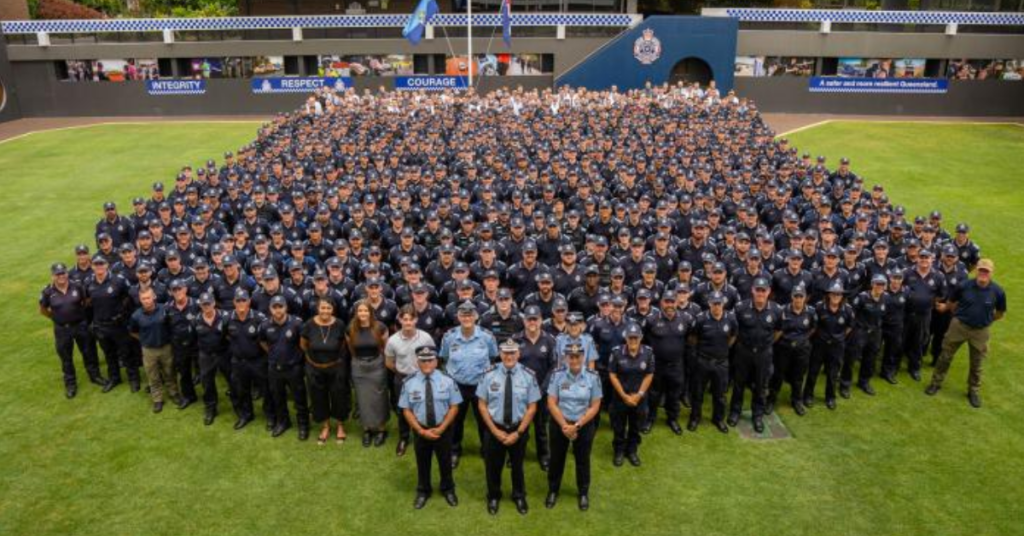
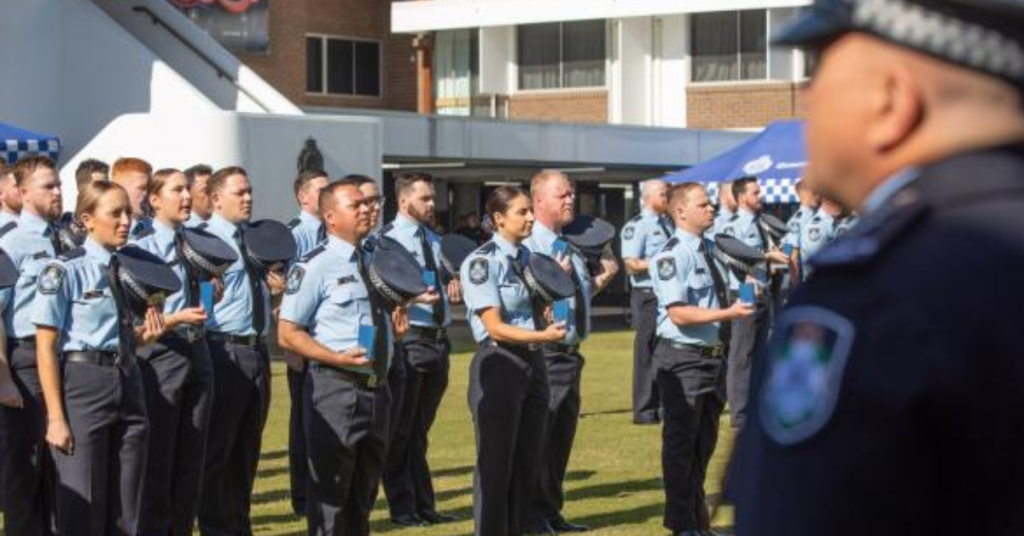
A major surge in police presence is set to change the face of Queensland neighbourhoods following the graduation of dozens of new officers at the Oxley police academy.
This recent ceremony at Oxley marked the final step for 61 recruits who are now moving into active duty across the state. Their entry into the force signifies the completion of a massive recruitment push that has added more than 1,600 new staff to the frontline in less than a year and a half.
These officers represent a diverse group of people, with ages ranging from 24 to 52. Many of them are starting second careers, bringing their previous life experience from jobs in teaching, the military, and prison security to their new roles in law enforcement.
The new officers come from many different walks of life and include people who have moved to Queensland from countries like Wales, Scotland, and England. Acting Commissioner Brett Pointing noted that this variety is a strength for the service because it reflects the different types of people living in the communities where these officers will work.
By having a workforce with varied skills and cultural backgrounds, the police service aims to better understand and support residents in both busy coastal cities and smaller outback towns.
These additional resources are being spread out to ensure every corner of Queensland feels the benefit of the increased numbers. Large groups have been sent to the Far North and both the north and south sides of Brisbane to address local safety concerns.
Regional areas like Townsville and the Gold Coast are also seeing significant increases in their local police numbers. Premier David Crisafulli stated that providing these extra boots on the ground is part of a wider goal to give the police service the tools they need to protect residents more effectively.
The arrival of these 1625 recruits is intended to help ease the pressure on existing staff and improve response times for local families. Minister for Police Dan Purdie explained that these new officers are already starting work in areas where they are needed most. The government plans to continue this growth by combining the increase in staff with updated laws and better support programmes for young people. This multi-layered approach is designed to create a more stable and secure environment for all Queenslanders as the new graduates begin their careers.
Before it became a national tradition, the Anzac biscuit passed through ordinary kitchens, including one in Chelmer, where a simple recipe would find its way into print.
It started with a line most people would miss — a set of initials and a suburb tucked at the end of a recipe. But for Chelmer, that small detail opens a door into a much larger story, one that connects a local kitchen to a biscuit known across Australia.
The clue appears in a recipe printed in the Sunday Mail on 26 June 1927. The ingredients are familiar: oats, golden syrup, butter, flour and coconut. It reads like a version many Australians would still recognise today. Then comes the final line — “E. G. (Chelmer.)” — placing the suburb into the history of the Anzac biscuit.
Photo Credit: National Library of Australia
A Recipe That Traveled Through Time
At first, the clipping seems like just another contribution to a newspaper cooking column. In the early 20th century, these pages were filled with recipes sent in by readers, often identified only by initials and their suburb. For many families, it was a way to share what worked in their own kitchens.
But the Anzac biscuit was already changing. Records show that by 1917, recipes using the name “Anzac biscuit” were appearing in print, though they looked quite different.
Photo Credit: National Library of Australia
Some included eggs and were served with fillings. Over the next few years, the recipe shifted. It became simpler, more practical, and closer to the version Australians know today.
By the 1920s, something new had been added: coconut. Recipes from this period show the biscuit settling into its modern form, compounded by the submission from a Chelmer reader.
More Than a Recipe
The Anzac biscuit is not just a popular bake; it also carries legal protection. The Department of Veterans’ Affairs administers laws that protect the word “Anzac”, and commercial sellers need permission to use it. That is why businesses cannot simply rename any sweet biscuit an Anzac and put it on the shelf, preventing marketing gimmicks.
Those rules also shape what can be sold as an Anzac biscuit. The product should not be called a “cookie” and should not stray too far from the traditional recipe and shape. There is some room for limited change, including versions made for dietary needs, but the biscuit still has to remain recognisable as an Anzac biscuit rather than a novelty spin on the original.
In 2008, Subway removed its Anzac biscuit from sale after problems with compliance, then brought it back in 2025 as a limited-time item made to the traditional recipe. The return was backed by RSL Australia, with part of the sales directed to support veterans and their families.
There is no single place where the Anzac biscuit began. Instead, it took shape across the country, through small contributions like this one. By 1924, printed recipes including coconut were appearing everywhere. Each version added something, adjusted something, or passed the idea along.
The Chelmer connection is notable for its simplicity. It has no famous chef, official invention record, or grand narrative—just initials, a modest suburb, and a recipe shared in a local newspaper. Yet, this is how many beloved traditions begin, taking shape in everyday life.
A former aged care site in Sherwood could soon house a premium childcare centre offering concierge-style services, even as it sits metres from a busy train line and level crossing, raising questions about whether a “calm” environment can be achieved in one of the suburb’s most active pockets.
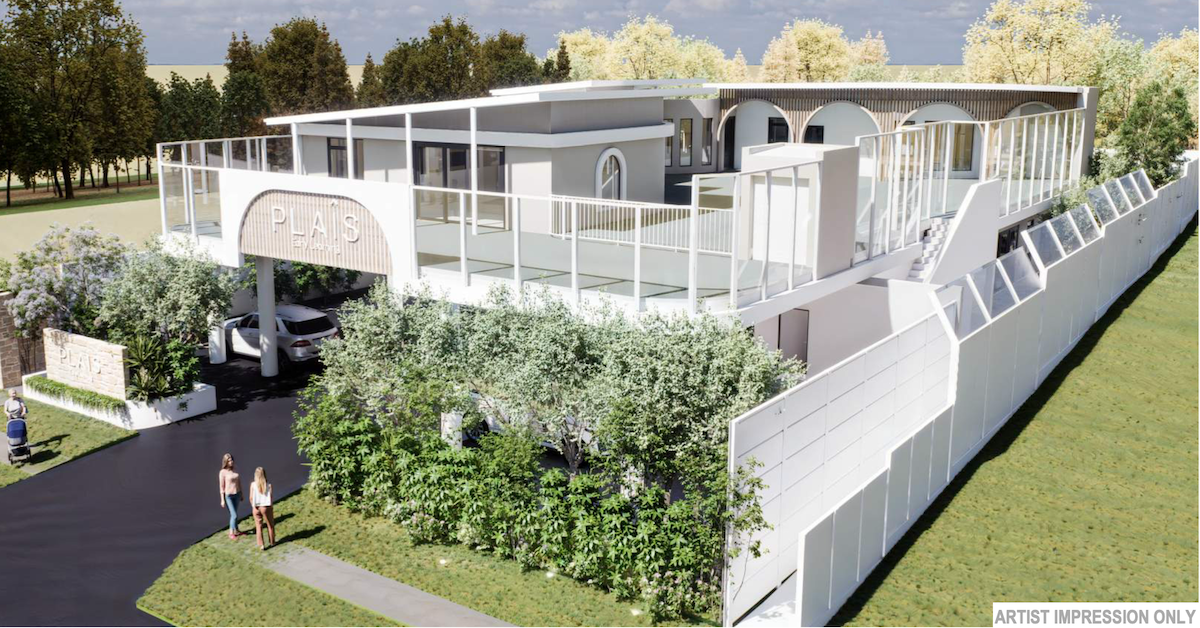
Plans for the proposed centre at 23 Thallon Street were lodged in March 2026, outlining a two-storey facility designed to cater for up to 73 children with 13 staff.
A different kind of childcare in Sherwood
The development application (A006981495) shows a childcare model that goes beyond standard care, aiming to support families with added services that ease daily routines. The operator already runs similar centres in Brisbane and is targeting inner-city areas where parents often juggle long work hours.
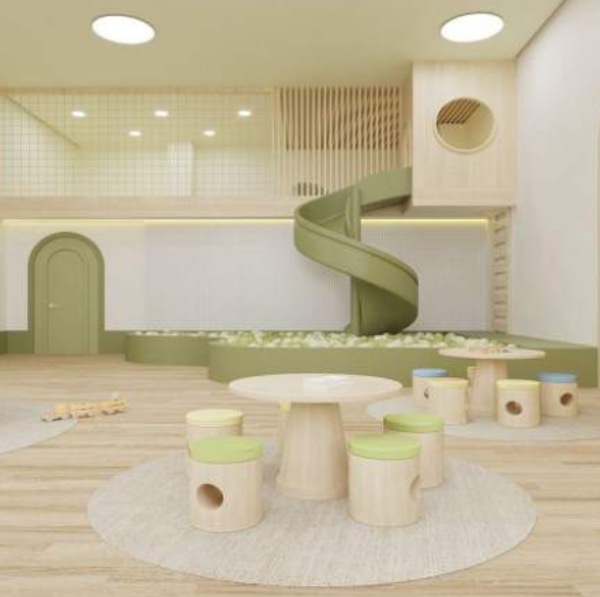
According to project details, the Sherwood centre would include a kitchen, laundry, sleeping areas and outdoor play spaces across two levels. The design leans on natural materials, soft tones and indoor-outdoor connections to create a more measured environment for children.
Photo Credit: DA A006981495
The plans also confirm capacity for 73 children and 13 staff, along with 15 on-site car parks, including one accessible space.
This approach reflects a shift towards childcare that functions as a broader lifestyle service, with operators focusing on convenience for working families.
A calm design in a busy location
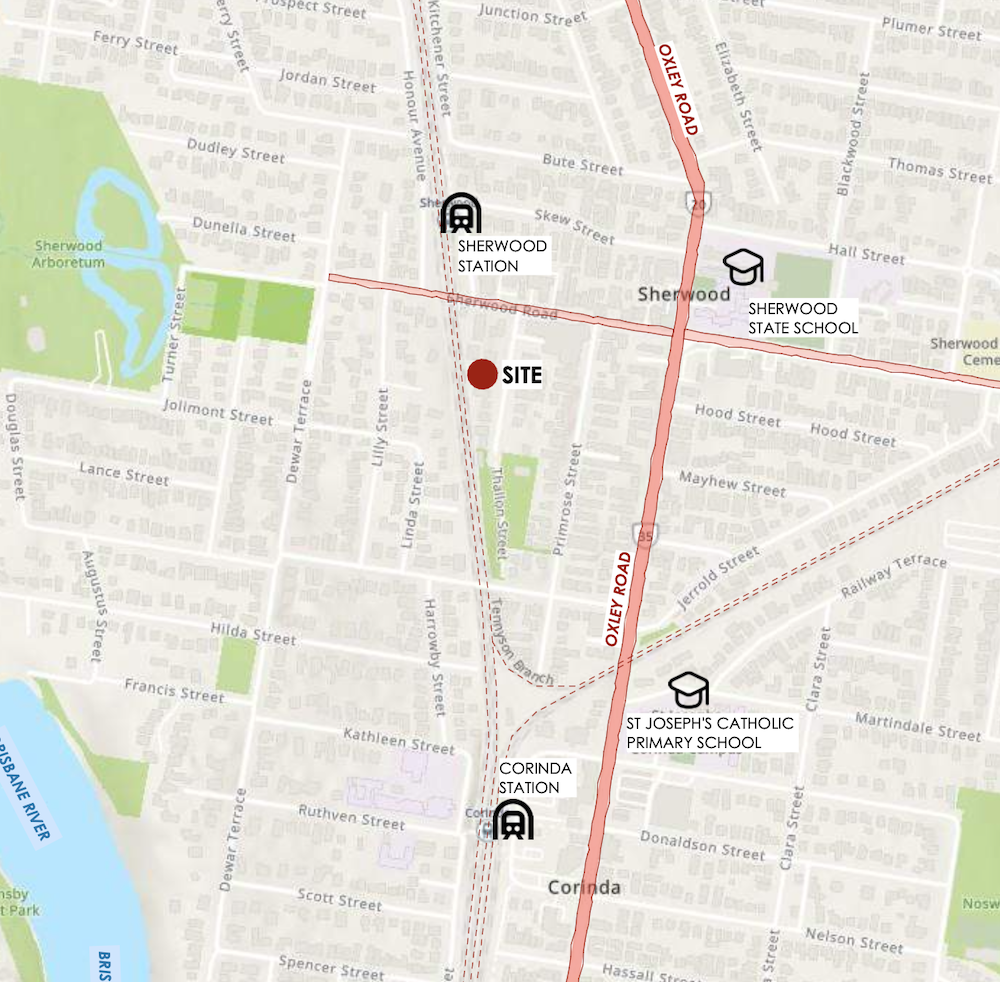
While the concept centres on reducing overstimulation, the site itself presents challenges. The block sits directly behind a train line and close to a level crossing, with Sherwood Road nearby carrying steady traffic.
Photo Credit: DA A006981495
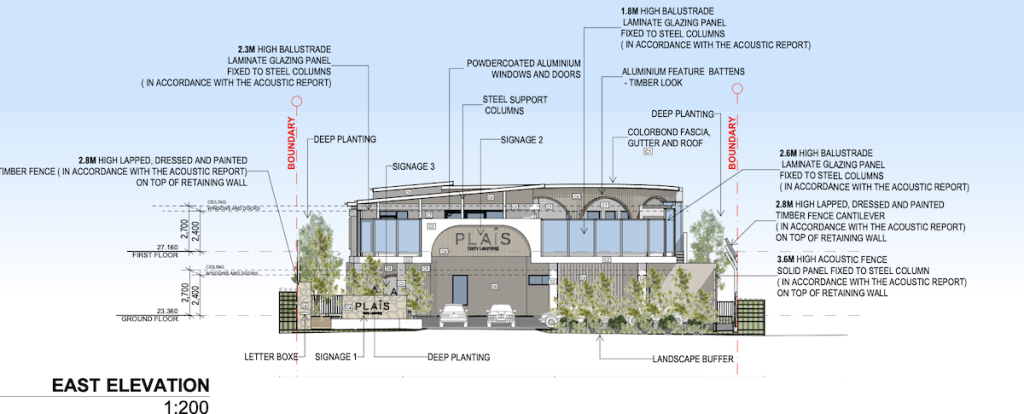
The application acknowledges these conditions, with site analysis mapping surrounding noise corridors and wind patterns. To manage this, the plans include multiple layers of acoustic fencing and barriers around the property.
Even with these measures, the location raises questions for nearby residents about how well the centre can deliver the calm setting it promotes, particularly during peak train and traffic periods.
Changing use, changing priorities
The site previously operated as an aged care respite centre, serving older residents before closing in recent years. Its shift to a high-end childcare facility marks a clear change in how the space will be used within the community.
Photo Credit: DA A006981495
The transition reflects evolving demand in growing suburbs, where childcare places are in short supply. However, it prompts a broader question about how community land is being repurposed and who benefits most from new developments.
The proposal comes at a time when the childcare sector is under increased scrutiny across Australia, with concerns raised in recent years about quality, affordability and oversight.
Thallon Street is a no-through road, but it connects directly to a busy main road and sits close to public transport. The plans include a new driveway and on-site parking to manage pick-up and drop-off traffic, though local impacts remain a key consideration.
With another kindergarten already located on the same street, the addition of a second childcare provider could further increase activity in the area.
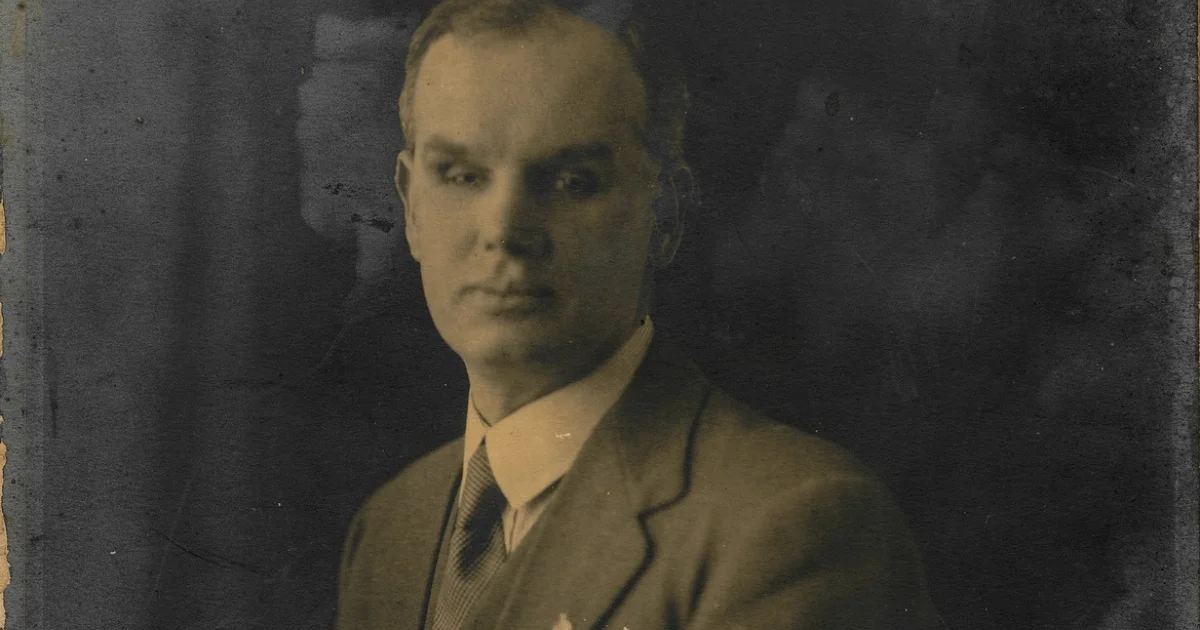
There is a war memorial in Graceville Memorial Park that has stood since November 1920. The man who unveiled it had lost both eyes and his right hand at Gallipoli five years earlier. His name was Edwin Maurice Little, and he had made Corinda his home.
Maurice, as he preferred to be known, was born in Barcaldine in 1893, the son of a Methodist minister. He attended Brisbane Grammar School from 1907 to 1909, captaining the First XI cricket team, before becoming a schoolteacher with the Department of Public Instruction. He was posted to Gladstone, and it was there that he enlisted on 16 September 1914, aged 21.
He was drafted into the 15th Infantry Battalion as a sergeant at Enoggera on 1 October 1914. The battalion, under the command of Lieutenant Colonel William “Bull” Cannan, joined Brigadier General John Monash’s 4th Brigade and embarked on the troopship Ceramic on 22 December 1914, bound for Egypt. After a period of training at Mena Camp near Cairo, the 4th Brigade embarked for Gallipoli on 12 April 1915.
Starboard view of White Star Liner SS Ceramic at sea (Photo credit: No known copyright restrictions/Wikimedia Commons/Australian National Maritime Museum’s Samuel J. Hood Studio collection)
The 15th Battalion landed at approximately 4:00pm on 25 April and moved up a narrow gully to the edge of an escarpment, establishing a defensive line at what would become known as Quinn’s Post, named after a captain in the battalion. It was the furthest point reached by the Australians on the first day and remained so throughout the campaign. The battalion garrisoned Quinn’s Post for the duration, sustaining continual casualties from sniping and bombs. Maurice was commissioned as a 2nd Lieutenant on 14 May to make up for the loss of officers.
On 26 May, a Turkish mine was exploded beneath the Anzac trenches at Quinn’s Post, and the Turks captured part of the trench system. Maurice and one other man attempted to hold back an enemy advance along a trench. Newspaper accounts from 1916, likely based on his own testimony, describe how he had been throwing Turkish bombs back before they exploded, doing so successfully six times before the seventh detonated in his hand.
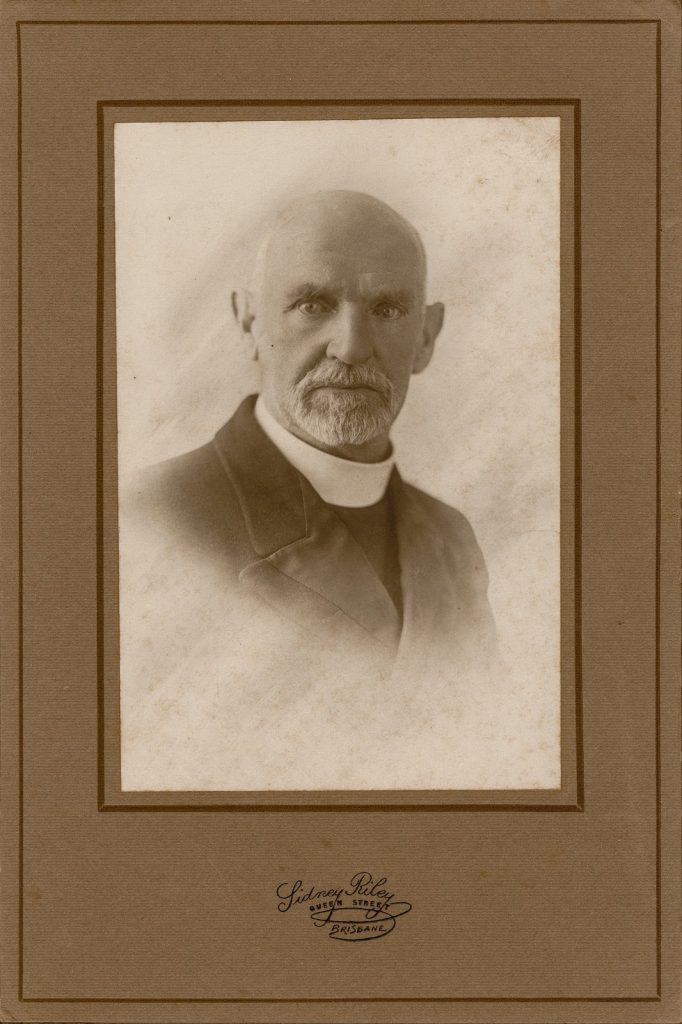
Reverend William Little (Photo credit: State Library of Queensland; Sidney Riley Studio)
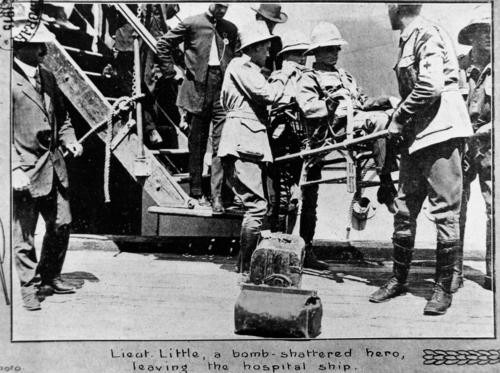
On 29 May he was transferred to the hospital ship Gascon. At the Australian General Hospital at Heliopolis in Cairo, his right hand and wrist were amputated and both eyes were removed. He also sustained a severe wound to his left knee, which became infected.
His father, the Reverend William Little, received a telegram advising that Maurice was wounded “not seriously.” A casualty list published in the press listed him as killed in action. According to researcher Ian Lang, whose account is published by the State Library of Queensland, the Reverend Little made his distress at the inaccurate reports known to his colleague, the Reverend William Brown of Sherwood.
Coming Home to Corinda
Photo credit: “The Queenslander” 11 December 1915, p.27, State Library of Queensland
Maurice’s recovery at Heliopolis was aided by Lizzie Crowler, an English missionary who had spent twelve years working for the Church Home Mission in the Sudan and had come to Cairo on furlough, where she volunteered as a nurse. Maurice and Lizzie married in Cairo, with Maurice carried to the ceremony in a chair due to his knee injury. Lizzie was 22 years his senior.
The couple returned to Australia aboard the Kanowna in October 1915. A medical board in Brisbane discharged Maurice as medically unfit, noting the loss of both eyes, the amputation of his right hand, arthritis in his leg wound, hearing loss in his right ear and the loss of several teeth. He was granted a pension of 41 pounds a year, with Lizzie receiving 45 pounds a year as his primary carer.
Maurice mastered Braille while in Egypt with Lizzie’s assistance. The Bible Society donated all 29 volumes of the Braille Bible. He spoke at a public meeting in the Ipswich Town Hall, and stood unsuccessfully for State Parliament in the seat of Bremmer on a Nationalist ticket in 1918. He wrote regularly for publications including The Queenslander and authored an essay, Blindness Described From Within, published in the Maryborough Chronicle on 16 August 1920. In 1923, Queensland Book Depot published his Sonnets and Other Verses, with a preface by Mr. Bousfield, headmaster of Brisbane Grammar.
Maurice and Lizzie settled in Corinda. After the war, Maurice became the inaugural president of the Sherwood branch of the Returned Soldiers and Sailors Imperial League. On 29 November 1920, he unveiled the Sherwood Shire War Memorial at Graceville Memorial Park. His former battalion commander, Brigadier General Cannan, by then State president of the RSSAILA, was also present.
In 1925 the couple travelled to England, where Maurice studied economics at Oxford for three years. The couple later lived in Sydney for a time, where Maurice pursued a writing career. He died in Bromley, London, on 19 August 1938, aged 45.
A Chelmer family has listed its long-held home for auction, as the suburb continues to record rising sales activity despite signs of a broader Brisbane property slowdown.
A family of five has placed its four-bedroom home at 7 Hurlton Street on the market after seven years, as changing circumstances prompt a move.
When the property was first purchased, the household was closely tied to local schools and community activity. With children now at or approaching university age, daily routines have shifted beyond the suburb.
Photo Credit: Ray White Sherwood
Chelmer Stands Out In Uneven Market Conditions
The sale comes at a time when Brisbane’s property market is facing pressure from affordability constraints and rising interest rates.
Photo Credit: Ray White Sherwood
Despite this, Chelmer has been identified as one of the suburbs where sales activity is continuing to rise, setting it apart from broader market trends.
Recent auction activity across Brisbane has also shown that some properties continue to attract competition, even as overall results point to more cautious buyer behaviour.
Photo Credit: Ray White Sherwood
Location And Layout Shape The Chelmer Offering
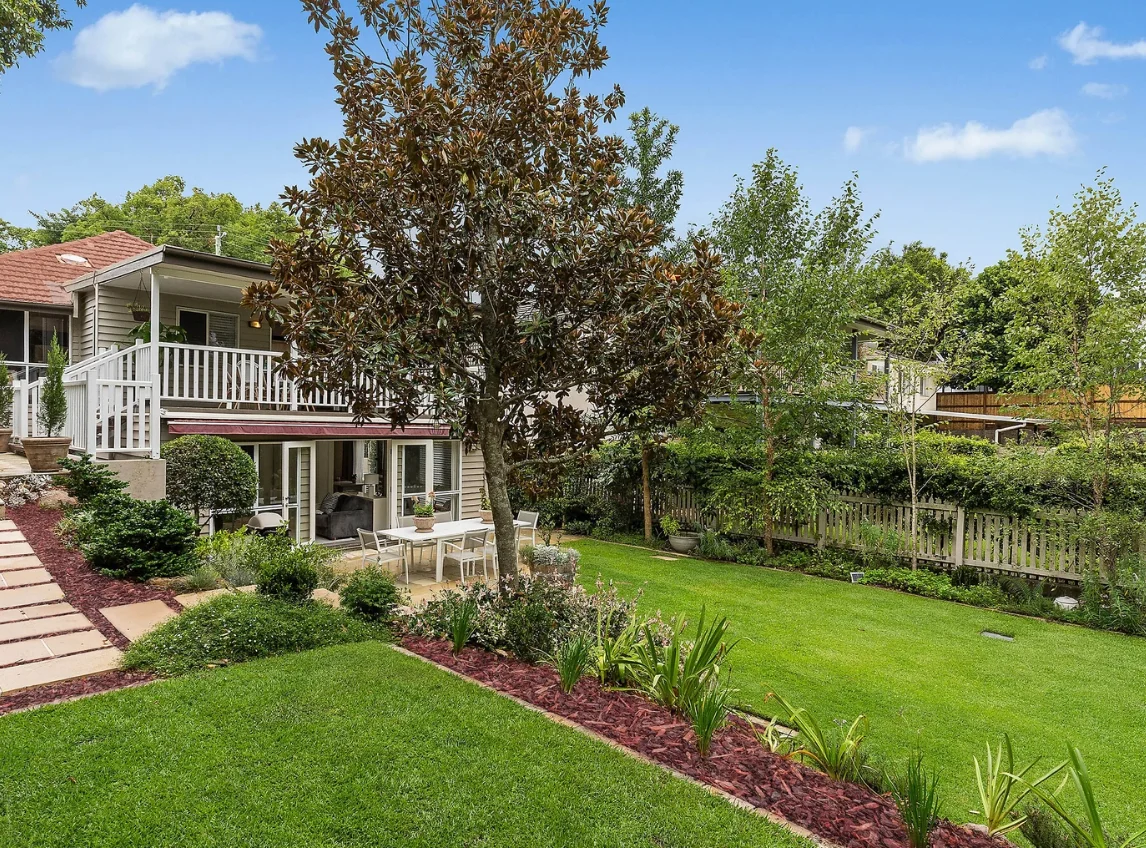
The property sits on a 607 square metre allotment within a leafy part of Chelmer, positioned about 100 metres from the local train station and close to nearby retail and services.
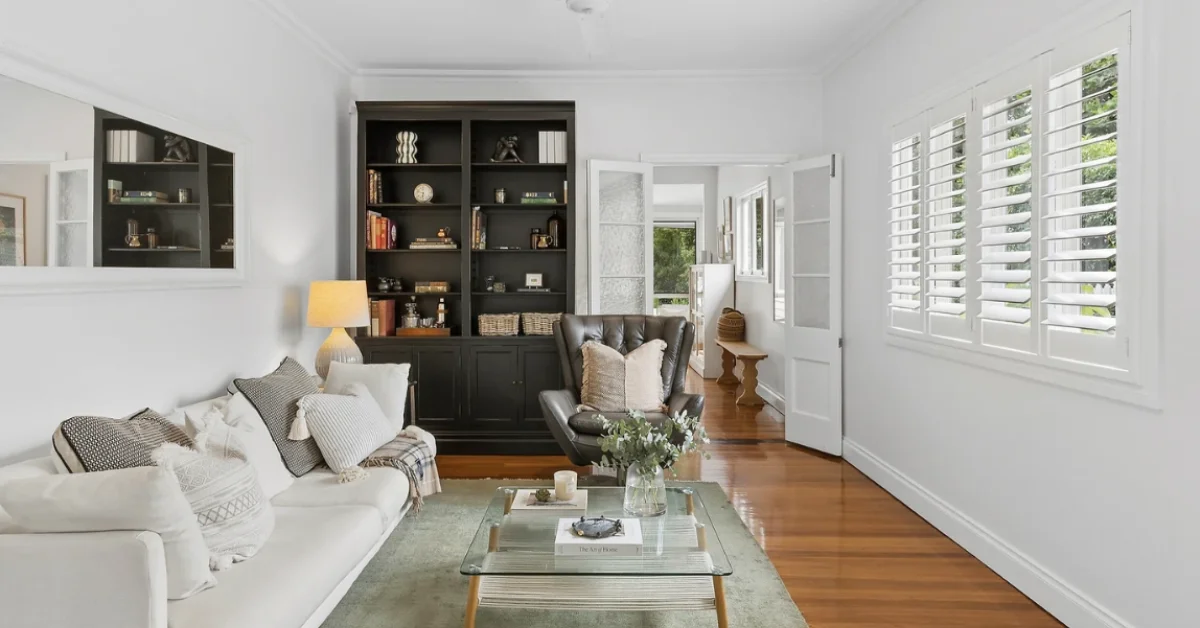
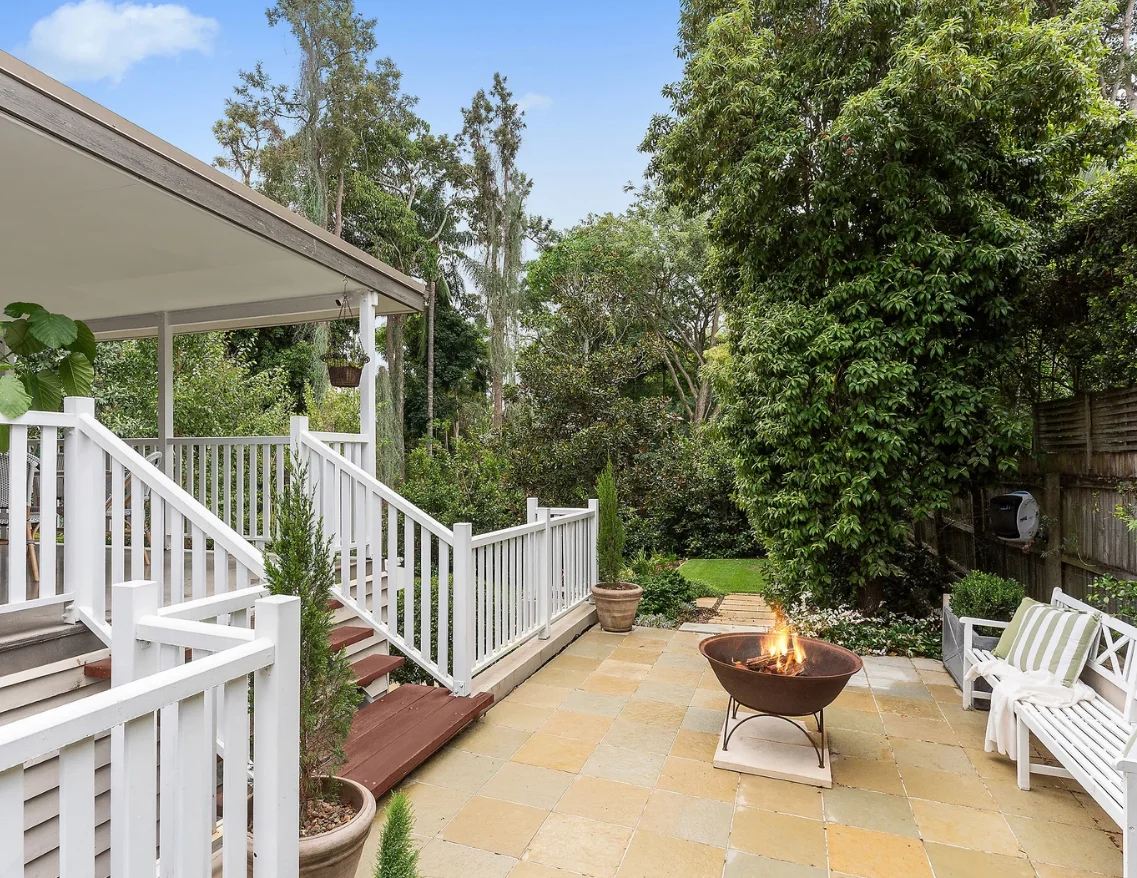
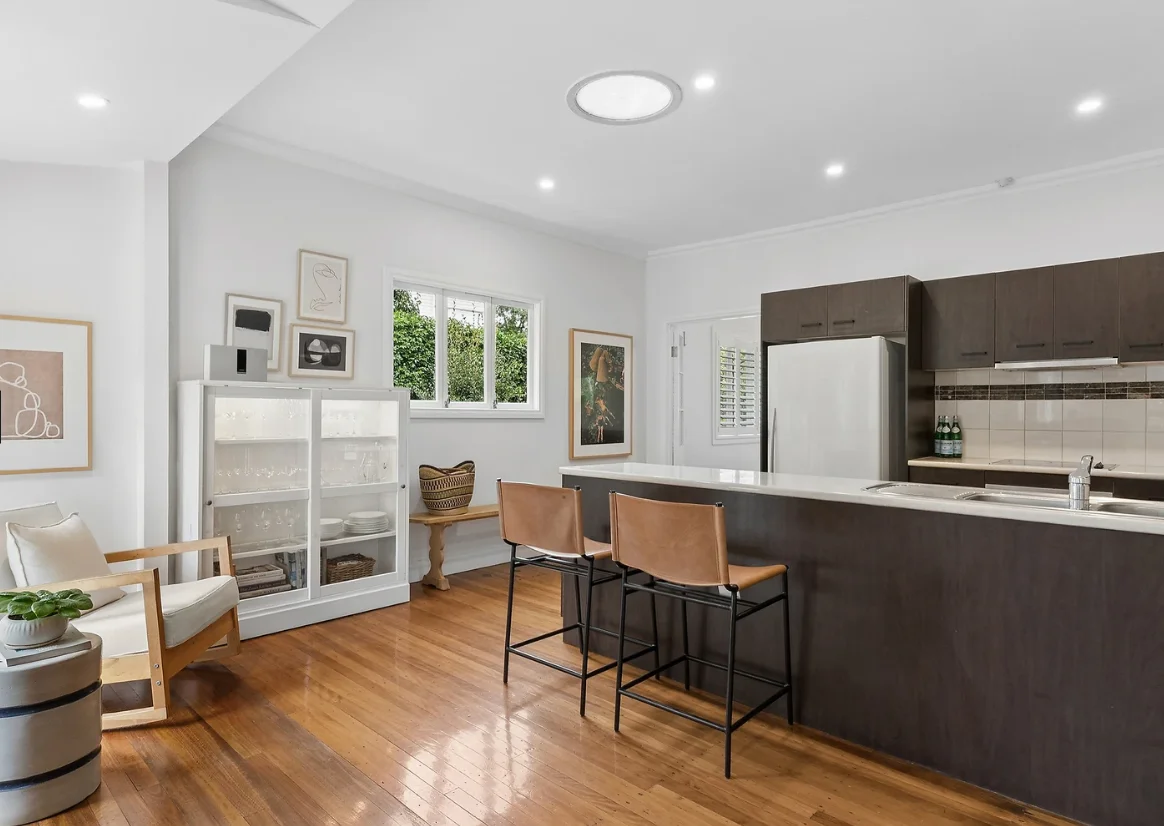
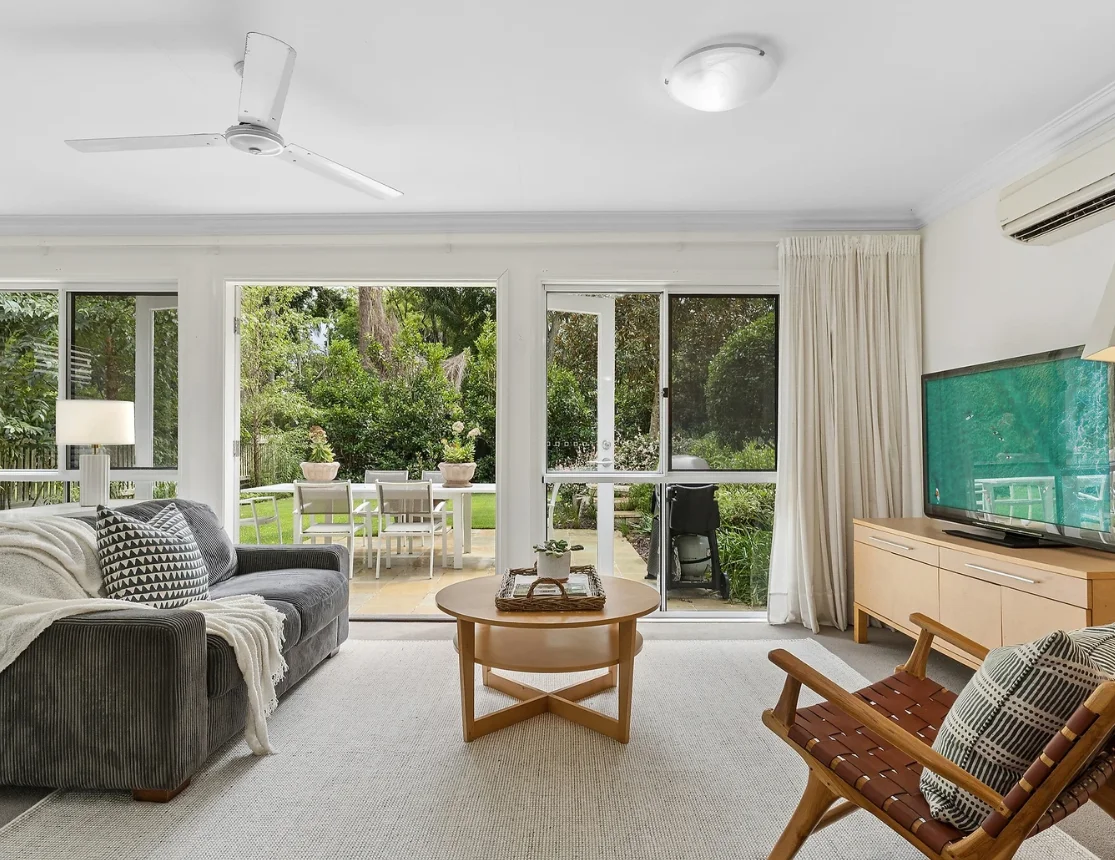
Designed across two levels, the home includes multiple living areas, a central kitchen and dining space, and a covered rear deck overlooking a landscaped backyard.
Additional features include a separate lower-level living zone, a master suite with ensuite and study, and a layout suited to both shared living and private retreat spaces.
Photo Credit: Ray White Sherwood
Auction Timing To Reflect Current Conditions
The Chelmer property is scheduled for an online auction at 4:00 p.m. on April 1, following a scheduled inspection period.
Listed through Ray White Sherwood, the sale will take place as buyers and sellers continue to navigate changing market conditions across Brisbane.
While overall conditions remain mixed, Chelmer continues to record activity, with the upcoming auction providing a further indication of current demand in the area.
For years, Oxley Golf Club has sat quietly along Boundary Road — a stretch of green holding its place as the surrounding corridor evolved around it.
Now, that position is being tested.
Discussions within the club have turned to significant changes tied to potential upgrades along Boundary Road, bringing the future of one of the area’s largest remaining green spaces into focus.
At a Special General Meeting in February, members were told the club is considering options linked to possible road widening works, including whether part of its Boundary Road frontage may need to be sold.
Set along one of Oxley’s busiest corridors, the golf club has operated for decades as both a sporting venue and a large stretch of open green space.
That location has always come with a trade-off.
Positioned along a key transport route, the course sits at the intersection of recreation and infrastructure pressure — a balance that is now beginning to shift.
Information presented to members outlined a scenario where land on the northern side of the course could be sold if upgrades proceed. A logistics developer, LogiSpace, was identified in member materials as a prospective buyer, though no deal has been confirmed publicly.
The long-term plan
Beyond any potential land sale, the discussions point to a broader reshaping of the site.
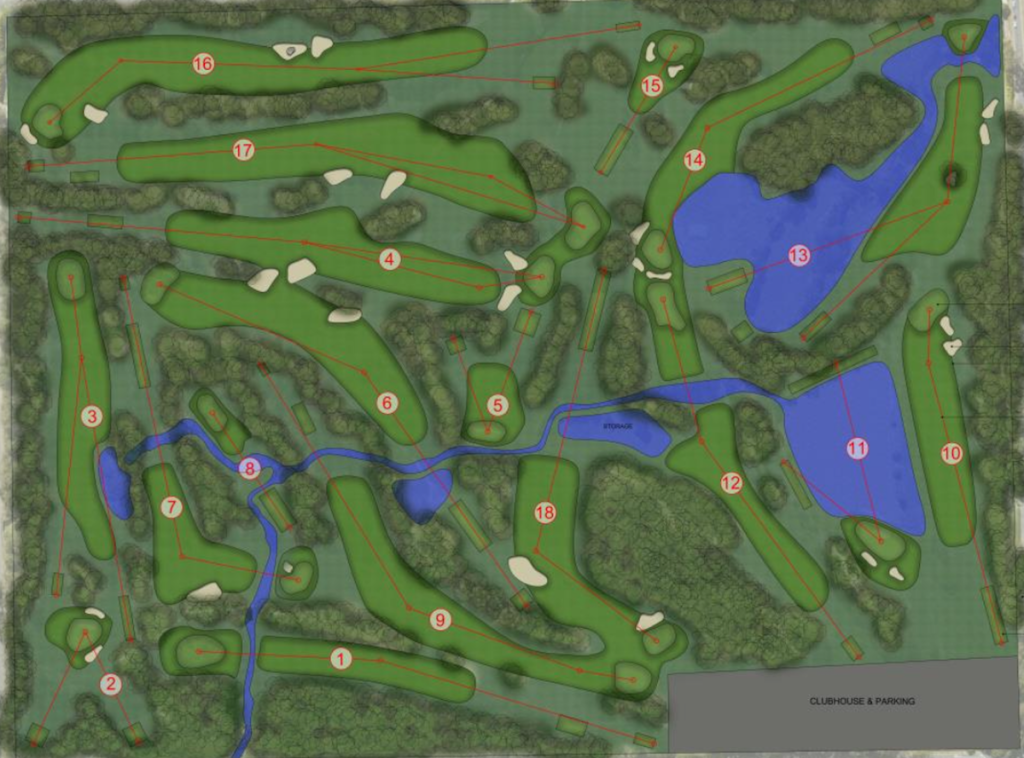
Members were told the club is exploring a longer-term plan that could see the course redesigned across a smaller footprint, alongside a new clubhouse and upgraded facilities.
Any changes would be subject to planning approvals and staged over several years. Early indications suggest construction, if it proceeds, could temporarily affect access to parts of the course, though no confirmed timeline has been released.
Photo Credit: ODVGA Newsletter – March 2026
Still early, but moving
At this stage, no formal development application is listed in Brisbane City Council’s public planning system, indicating the proposal remains in its early phases, likely at the pre-lodgement or preliminary planning stage.
A familiar pressure
Oxley Golf Club is not alone in facing these questions.
Across metropolitan areas, large recreational sites — particularly golf courses — are increasingly being drawn into planning conversations as cities look for land to support infrastructure and growth.
The club has already explored ways to evolve its facilities in recent years, including upgrades aimed at broadening how the site is used, reflecting changing expectations around how these spaces are used.
For now, the course remains open and operating as usual, with no public notice indicating confirmed redevelopment or closure.
But with early discussions now underway, the focus will shift to what emerges next — and how the community is brought into decisions that could reshape one of Oxley’s most recognisable landscapes.
Oxley was among three outer suburbs represented in a University of Queensland study that found being car-free, even for just 20 days, is simply not realistic for most people living in Brisbane.
The ten participants were mostly inner-city residents living within two kilometres of the CBD, with the study also drawing participants from further afield in Oxley, Manly and Indooroopilly.
Urban planners from UQ’s School of Architecture, Design and Planning put together a group of ten volunteers, five men and five women, and asked them to go without their cars for 20 days. The study was led by Associate Professor Dorina Pojani and PhD scholar Sufian Almubarak, with Sara Alidoust also listed as a co-author on the published paper.
Photo credit: University of Queensland
Participants were provided with public transport cards and asked to go about their normal daily lives using buses, trains, cycling, walking, and shared micro-mobility options like e-scooters. Ride-share and taxi services were available only in genuine emergencies.
When the 20 days were up, every participant was glad to have their car back. Not one was willing to consider making the change permanent.
Dr Pojani said the feedback across the board was that Brisbane simply makes car-free living too hard. She pointed to the city’s low-density, spread-out urban form and the absence of well-connected transport alternatives as the root causes, and noted these were problems decades of planning decisions had created.
The mood among participants shifted noticeably over the course of the trial. Early enthusiasm gave way to frustration, and most described the experience as disorienting. Public transport experience was mixed, with major service gaps reported outside the inner city.
Parents felt the pinch most
Photo credit: University of Queensland
For participants with children, the trial created additional headaches. School runs and after-school activities could not be managed on public transport alone and had to be handed off to someone else with access to a vehicle. Wider family outings and trips out of town were simply put off until the trial was over.
The financial picture offered a partial upside. Across the 20-day period, participants saved roughly $300 in car-running costs, though alternative transport still set them back an average of $125 each. One participant said they had not appreciated until then how much ongoing expense their car represented. Dr Pojani noted that Queensland’s 50-cent fares had contributed to growing public transport use, but said the policy alone was not enough to make people feel they could rely on the network as a substitute for their car.
Four participants did commit to catching public transport for shorter inner-city trips going forward, but none were prepared to go further than that.
The study, published in the journal Transportation, compared the experiences of Brisbane participants with those from Al-Ahsa in Saudi Arabia, a city with a similarly car-dependent urban structure. Dr Pojani’s conclusion was direct: without serious investment in public transport, residents of sprawling cities like Brisbane cannot be expected to give up driving.
For those living in Oxley, where the car has long been less a lifestyle choice than a basic necessity, that conclusion will come as little surprise.
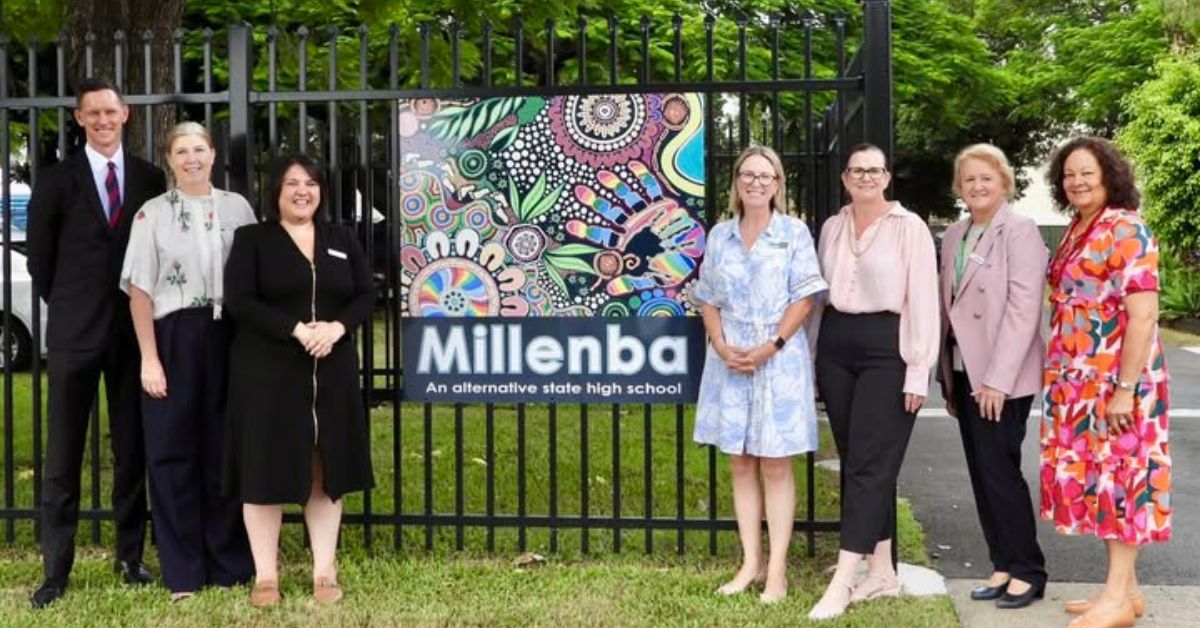
Barrett Adolescent Schoolin Tennyson formally became Millenba on Tuesday 17 February 2026, adopting a new name meaning “place of many pathways” following a consultative process with staff, students and school stakeholders.
The renaming ceremony at the Tennyson campus brought together community members, Elders and dignitaries to mark the transition, with students delivering presentations that reflected the school’s values and purposes. The occasion recognised the history of the school under its former names while stepping forward into a new chapter grounded in inclusion, growth and opportunity.
For those unfamiliar with the school, Millenba occupies a quietly tucked-away site in the back blocks of Tennyson, formerly the grounds of Tennyson Special School. Despite its low profile in the broader community, the work carried out within its grounds is among the most meaningful of any school in Brisbane, supporting young people experiencing serious mental health challenges to transition from hospital back into education.
A School With a Layered History
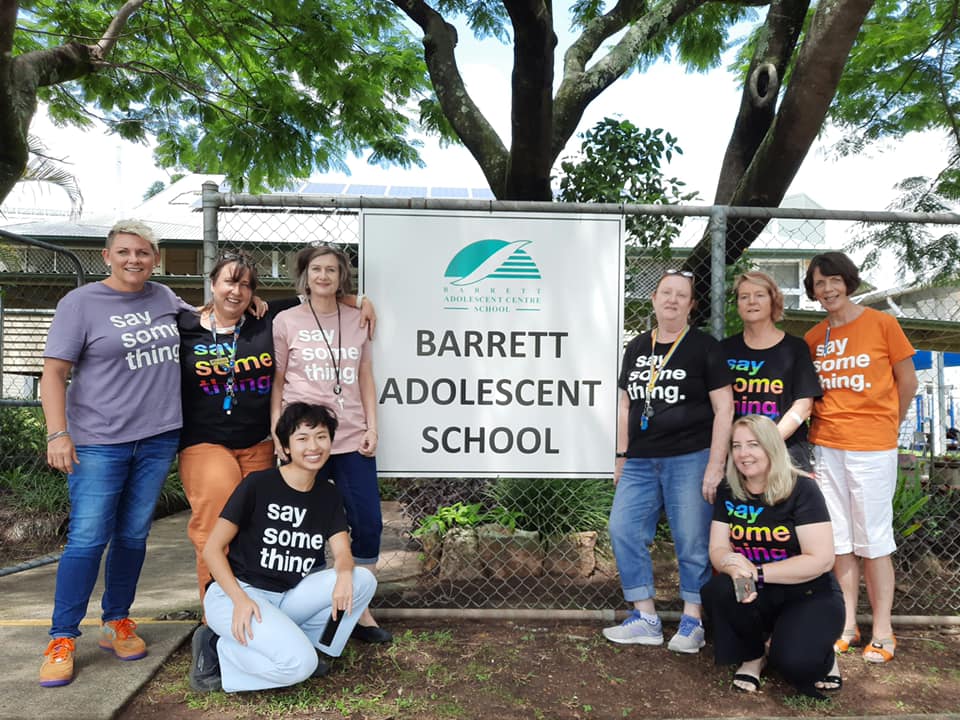
The story of the school on the Tennyson site has unfolded across several distinct chapters. Its origins lie with the Barrett Adolescent Centre Special School, which operated as part of the Barrett Adolescent Centre before undergoing significant change in 2014. That year, the school separated from the centre and relocated temporarily to Yeronga State High School, a move that allowed it to focus more specifically on the educational needs of students with complex mental health issues.
Photo Credit: Barrett Adolescent School (Millenba)/Facebook
In 2015, the school was formally established as a stand-alone transition school on the former Tennyson Special School grounds, operating under the name Barrett Adolescent School. From that point, it continued its work supporting students in Years 7 to 12 who face significant barriers to accessing education in mainstream settings because of complex mental health needs. The school has served in that role for a decade, building a reputation within specialist education and health circles for the quality of its approach and the depth of its care.
The February 2026 renaming to Millenba marks the beginning of the school’s next chapter, with the new name chosen through genuine consultation with the people who know the school best.
What the Name Millenba Means
The name Millenba carries real significance for the community it serves. Translated as “place of many pathways,” it reflects the core reality of what the school does: it does not follow a single, fixed educational route but instead opens up multiple possibilities for young people who have had their educational journey interrupted or disrupted by serious health challenges. The name acknowledges that recovery, learning and growth rarely follow a straight line, and that the value of the school lies precisely in its capacity to meet each student where they are.
The renaming process was consultative, drawing on the perspectives of staff, students and stakeholders before arriving at a name that the school community felt genuinely represented its identity and purpose. The ceremony itself gave students a central role, with presentations that demonstrated both the quality of the school’s educational programme and the pride its young people take in belonging to it.
Why This Matters to the Tennyson and Oxley Reach Community
For residents of Tennyson, Oxley Reach and the surrounding suburbs, Millenba represents something that many may not have known existed in their neighbourhood. The school sits quietly within the Tennyson area, serving a group of young people whose needs are among the most complex in Queensland’s education system, with very little fanfare or public visibility.
That low profile is partly by design. The students who attend Millenba are navigating serious mental health challenges, and discretion and safety are part of what the school provides. But the renaming ceremony is an appropriate moment for the broader community to become aware of the extraordinary work happening in their suburb. A school that helps vulnerable young people find their way back to education and forward into life represents the best of what a community can offer its most at-risk members.
For families in the area who may have a young person experiencing mental health challenges that are affecting their ability to engage with mainstream schooling, Millenba may be an important resource worth knowing about.
More information about Millenba, including enrolment pathways and the school’s history, is available at millenba.eq.edu.au.
An approved application to remove a roughly 100-year-old tree outside 91 Donaldson Street, Corinda, has drawn responses from local residents, with the post drawing views on both sides.
A group of Donaldson Street neighbours raised the matter in a post to a Facebook group, saying the tree had been part of the street’s character for decades and provided canopy, shade and cooling to the neighbourhood. They say the previous owner of the property lived alongside the tree for more than 70 years.
According to the post, it was widely understood and disclosed during the recent sale of the property that the tree formed part of the streetscape and was unlikely to be approved for removal. The neighbours say the new owners subsequently sought the tree’s removal. The post states the proposed removal appears to be linked to improving the property’s rental potential.
Photo credit: Google Street View
The neighbours are calling on residents to write to Brisbane’s local officials and Cr Nicole Johnston requesting the tree be retained and any proposed removal be carefully reviewed.
The post drew responses on both sides. Some residents expressed support for keeping the tree. “Trees are so important in our lives,” wrote one commenter who said they grew up in the area. Others raised concerns about the species, citing falling branches, vehicle damage, and the volume of green waste it produces. One commenter noted the tree blocks the driveway to the property, describing the situation as “a tough one.”
Photo credit: Google Street View
Several residents also cautioned against assuming the approval was made without proper grounds. “Usually council is very reasonable regarding removing trees,” one wrote, suggesting that an approval typically reflects an assessment of health or safety risk, and noting that those opposed to removal might consider whether they would be prepared to accept liability for future damage.
What the Local Laws Say
Street trees in Brisbane are protected under the Natural Assets Local Law 2003. Residents require permission before pruning, removing or otherwise interfering with a Council tree, including works affecting a tree’s root system.
When a removal is sought, Brisbane conducts an inspection through a qualified arborist, who assesses the tree and recommends a course of action in line with Council’s guidelines. According to Council’s website, grounds that may support a removal assessment include trees posing an imminent risk to public or private property, diseased or dead trees, fallen trees, broken branches, and obstructions to footpaths, roads or traffic sightlines.
Brisbane’s guidelines also set out what does not constitute grounds for removal or maintenance works. These include leaf, fruit, seed or flower drop; shading of private swimming pools or solar panels where trees predate the installation; improvement of views from private property; and fence-line pruning.
Following an assessment, possible outcomes include no action, pruning, health management, or removal and replacement planting. Where a tree is removed, Council replants within the local area where the site is suitable, though not necessarily the same species.
Residents can submit a tree maintenance or removal assessment request online via the BCC website or by calling Council on 07 3403 8888.
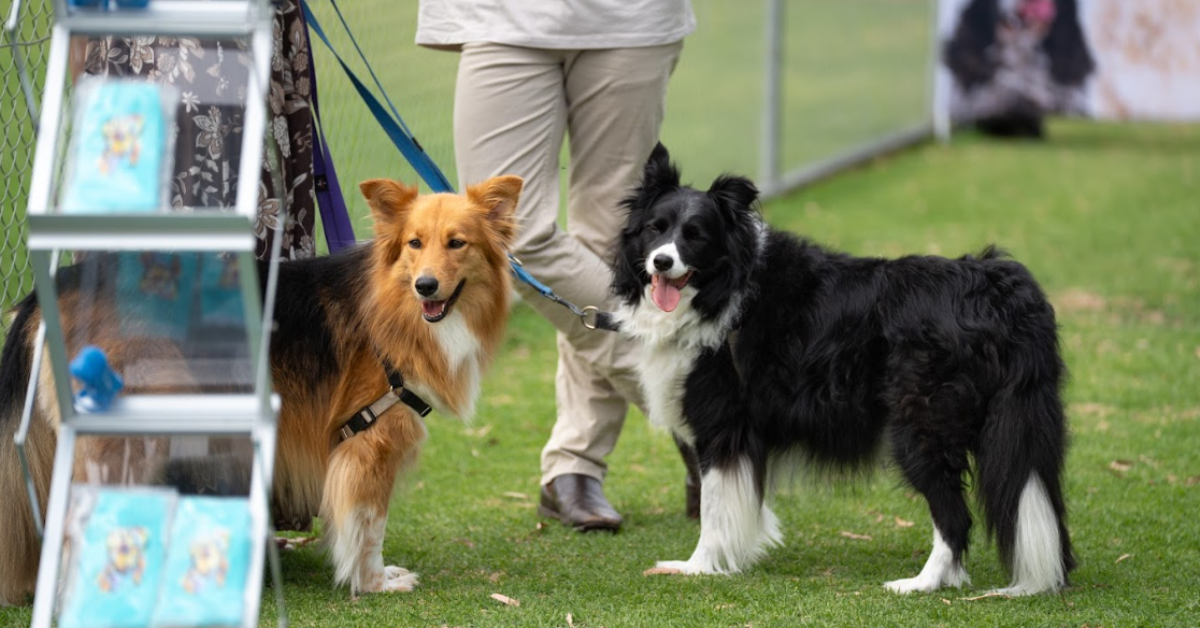
Nearly every dog tested during a recent veterinary pilot program across Australia was found to still have active immunity against core diseases, sparking a major shift in how local pet owners in Durack approach their annual clinic visits.
The findings suggest that many dogs may be receiving more injections than their bodies actually require to stay safe. By using a simple blood test known as a titre test, vets can now see exactly how much protection a dog has left from previous vaccinations. This method allows for a more tailored health plan that focuses on the individual needs of the animal rather than following a generic schedule for every pet in the neighbourhood.
The Roadshow Comes to Queensland
The upcoming event in Durack is part of a national tour organised by 5 Hounds, a pet wellness company focused on evidence-based care. The clinic will take place at Dogs Queensland, located at 247 King Avenue, on 14 March. Pet owners can bring their dogs between 9 am and 3 pm to meet with professionals and have the testing performed.
This stop is one of five major city visits designed to make advanced veterinary diagnostics more accessible to everyday families. While the service costs $150 for the general public, it is offered at no cost to those who subscribe to the 5 Hounds health platform.
Scientific Insights into Canine Immunity
Photo Credit: Supplied
The push for this roadshow began after a trial run involving 510 dogs showed that only three of them actually needed a booster shot at the time of testing. Dr Will Maginness, the veterinarian who started the initiative, explained that the goal of the program is to ensure dogs are protected without being over-treated.
He noted that while vaccines are vital for stopping the spread of serious illnesses like parvovirus and hepatitis, many dogs retain their immunity for much longer than a single year. According to the World Small Animal Veterinary Association, adult dogs that have finished their initial puppy shots generally only need core boosters every three years at most.
Testing is only one part of the broader health picture for local dogs. The program also highlights how a dog’s diet and gut health play a massive role in how well their immune system functions over time. By combining regular diagnostic checks with high-quality nutrition, owners can often help their pets maintain natural defences more effectively.
Dr Maginness stated that these tests are meant to work alongside regular physical exams, which remain the most important way to catch other health issues early. The initiative aims to give Durack residents the data they need to make confident decisions about their pets’ long-term wellbeing.