





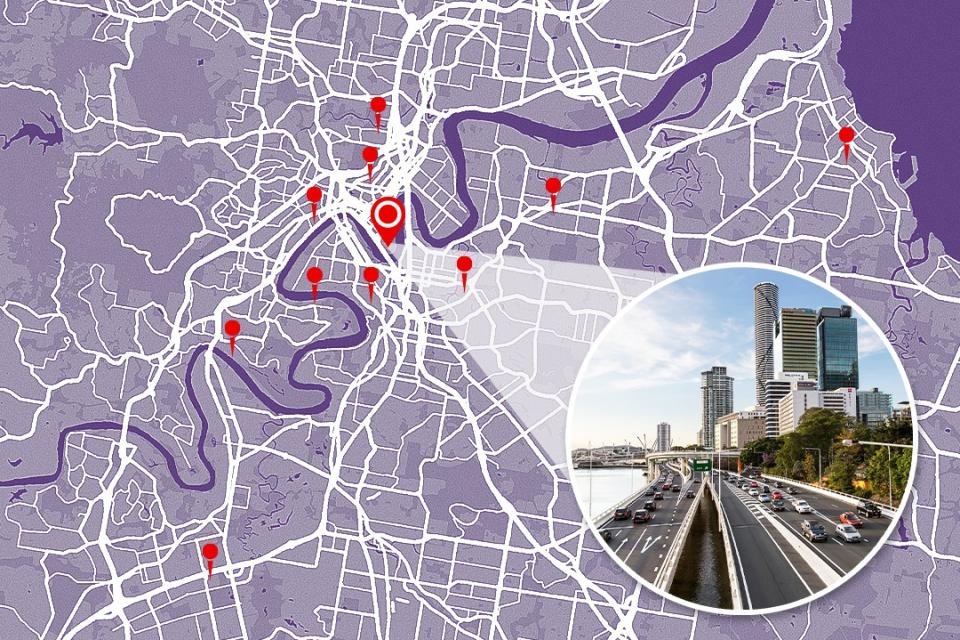
Oxley was among three outer suburbs represented in a University of Queensland study that found being car-free, even for just 20 days, is simply not realistic for most people living in Brisbane.
Read: Residents Say Oxley & Inala Car Parks Among Brisbane’s Most Stressful
The ten participants were mostly inner-city residents living within two kilometres of the CBD, with the study also drawing participants from further afield in Oxley, Manly and Indooroopilly.
Urban planners from UQ’s School of Architecture, Design and Planning put together a group of ten volunteers, five men and five women, and asked them to go without their cars for 20 days. The study was led by Associate Professor Dorina Pojani and PhD scholar Sufian Almubarak, with Sara Alidoust also listed as a co-author on the published paper.
Participants were provided with public transport cards and asked to go about their normal daily lives using buses, trains, cycling, walking, and shared micro-mobility options like e-scooters. Ride-share and taxi services were available only in genuine emergencies.
When the 20 days were up, every participant was glad to have their car back. Not one was willing to consider making the change permanent.
Dr Pojani said the feedback across the board was that Brisbane simply makes car-free living too hard. She pointed to the city’s low-density, spread-out urban form and the absence of well-connected transport alternatives as the root causes, and noted these were problems decades of planning decisions had created.
The mood among participants shifted noticeably over the course of the trial. Early enthusiasm gave way to frustration, and most described the experience as disorienting. Public transport experience was mixed, with major service gaps reported outside the inner city.
Parents felt the pinch most
For participants with children, the trial created additional headaches. School runs and after-school activities could not be managed on public transport alone and had to be handed off to someone else with access to a vehicle. Wider family outings and trips out of town were simply put off until the trial was over.
The financial picture offered a partial upside. Across the 20-day period, participants saved roughly $300 in car-running costs, though alternative transport still set them back an average of $125 each. One participant said they had not appreciated until then how much ongoing expense their car represented. Dr Pojani noted that Queensland’s 50-cent fares had contributed to growing public transport use, but said the policy alone was not enough to make people feel they could rely on the network as a substitute for their car.
Four participants did commit to catching public transport for shorter inner-city trips going forward, but none were prepared to go further than that.
Read: BBC Moves Forward With Sporting Facilities At Its Cliveden Avenue Property In Oxley
The study, published in the journal Transportation, compared the experiences of Brisbane participants with those from Al-Ahsa in Saudi Arabia, a city with a similarly car-dependent urban structure. Dr Pojani’s conclusion was direct: without serious investment in public transport, residents of sprawling cities like Brisbane cannot be expected to give up driving.
For those living in Oxley, where the car has long been less a lifestyle choice than a basic necessity, that conclusion will come as little surprise.
Published 24-March-2026

