



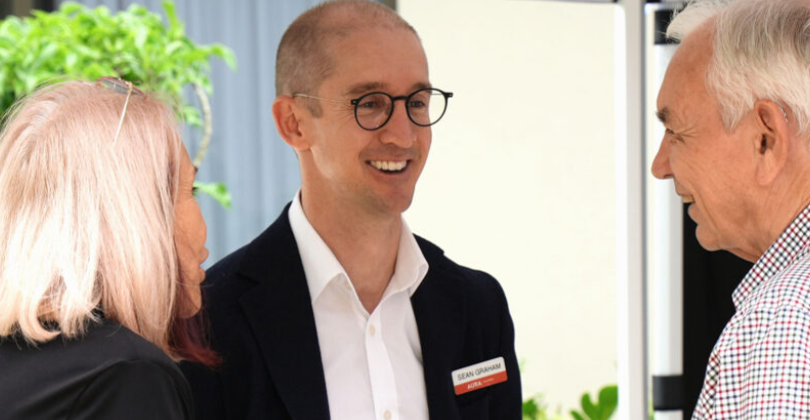
Life unfolds over decades and yet, in retrospect, it seems to pass in the blink of an eye. We move through distinct phases: childhood and adolescence, single life and dating, marriage and raising a family, navigating school years while careers evolve – and then, suddenly, the empty nest appears and retirement comes into view.
Studies have shown that social interaction is linked to slower cognitive decline and greater happiness. This is not rocket science. We lead busy lives and then slow down, quickly assuming that our minds will adapt easily.
Independent retirement living has become the very best way to enter that phase, with a mixture of social activity, along with low maintenance living enabling less stress and more support when needed.

Many people don’t begin thinking seriously about retirement living until circumstances force their hand. A health event, a fall, or the gradual realisation that the family home has become more responsibility than freedom can quickly turn what should be a considered decision into a rushed one.
With life expectancy now extending beyond 80 years for Australians overall, the retirement phase of life has lengthened considerably, placing greater emphasis on housing, independence and future-focused decision-making. Longer lives mean many people will spend decades navigating changing health, mobility and lifestyle needs — often without having aligned the practical pieces in advance.

Across Australia, advisers working in law, health, property and retirement living increasingly observe the same pattern: people who prepare earlier experience less stress, retain more control, and make clearer choices when change becomes necessary. Preparing for retirement is rarely about a single decision. It is about aligning legal, lifestyle, family and housing considerations early, so transitions feel deliberate rather than reactive.

Legal and medical decisions made calmly, not in crisis
One of the most persistent gaps in later-life planning is the absence of up-to-date legal and medical arrangements. Public Trustee organisations and elder-law practitioners across Australia regularly report that many adults do not have a current will or enduring power of attorney in place, and that these documents are often only addressed after a health event has already occurred.

Legal bodies specialising in elder law consistently emphasise that preparing wills, enduring powers of attorney and advance care directives early reduces uncertainty, avoids disputes and delays, and ensures decisions about finances, healthcare and living arrangements reflect personal wishes rather than default processes. Planning ahead is not about anticipating decline; it is about preserving autonomy.
Downsizing as a transition, not a single event
Downsizing is often framed as something to “get through,” but housing and retirement-living research increasingly shows it works best when approached gradually. Studies by the Australian Housing and Urban Research Institute indicate that many older Australians continue to live in homes larger than their functional needs, often delaying change until maintenance, safety or health concerns become pressing.


Industry guidance consistently encourages starting early and small — sorting possessions incrementally, focusing on what supports life now, and allowing time for emotional as well as practical adjustment. Research cited by the Retirement Living Council and Meaningful Aging Australia suggests that residents of well-designed retirement communities are generally more socially engaged, more physically active and less likely to experience avoidable hospitalisation than peers ageing alone.
When downsizing is treated as a process rather than a deadline, it becomes less about loss and more about regaining time, energy and flexibility.
Partners, family and future needs
Retirement decisions rarely affect just one person. Health professionals and aged-care policy bodies frequently stress the value of early conversations with partners and family members about future needs — particularly around access to healthcare, nutrition, mobility and preferred levels of independence.
The Productivity Commission has noted that planning ahead reduces pressure on families and leads to better-aligned outcomes when care or support is eventually required. These conversations are not about predicting illness. They are about aligning expectations early, so that later decisions are clearer, less conflicted and more respectful of everyone involved.
Preparing to downsize the family home
For many people, downsizing the family home is the most complex part of retirement planning. It affects finances, daily routines, location and timing, which is why approaching it early gives people greater control and reduces pressure later.

Before listing a property, it helps to assess not only the home itself but how well it supports life now. That includes maintenance demands, accessibility, location and the role the home plays in everyday routines. Early conversations with a real estate professional can provide clarity on realistic pricing, likely timeframes and selling options — without committing to a sale before you are ready.
A practical checklist for downsizing decisions:
- Does the home still suit day-to-day mobility and access needs?
- How much time, cost and effort does ongoing maintenance require?
- Is the location convenient for transport, healthcare and social connection?
- Would a smaller or differently designed home improve daily life?
- How important is flexibility around timing, settlement and moving dates?
- What possessions are essential to keep, and what could be passed on or let go?
- How might future lifestyle changes affect housing needs?
Choosing the right agent matters. Look for someone who understands the local market, can discuss strategy and timing rather than just outcomes, communicates clearly without pressure, and has experience working with downsizers and long-held family homes.
There are many paths to luxury retirement living — it depends on how you want to live
One of the most important shifts in retirement living is the move away from a single “ideal” model. Today, luxury retirement communities are shaped around lifestyle preference rather than age alone. Some people prioritise walkable inner-suburban living close to shops and healthcare. Others value an established community with a strong social rhythm, or the openness and calm of a green, golf-course setting.
What matters is that modern retirement living now offers genuine choice, allowing people to select an environment that reflects how they want their next chapter to feel.

Somerset Indooroopilly reflects an inner-west lifestyle built around familiarity and ease. Set beside the Indooroopilly Golf Club, the village is designed as light-filled apartments arranged around shared gardens and terraces, rather than traditional cul-de-sacs. Maintained gardens, shared amenities such as a pool, gym and library, and in-home safety systems supported by on-site management position Somerset around rightsizing — simplifying life without making it smaller. The community has recently been named a finalist in the National Retirement Living Awards for Best Community Development – Small Operator, recognising the design and care behind its development.

Kingsford Terrace Corinda offers a more established, community-led environment. Located in Corinda and close to rail and local services, the village has evolved over time and remains firmly embedded within its surrounding suburb. The emphasis here is on balance: private, low-maintenance homes paired with shared spaces that support connection without obligation.
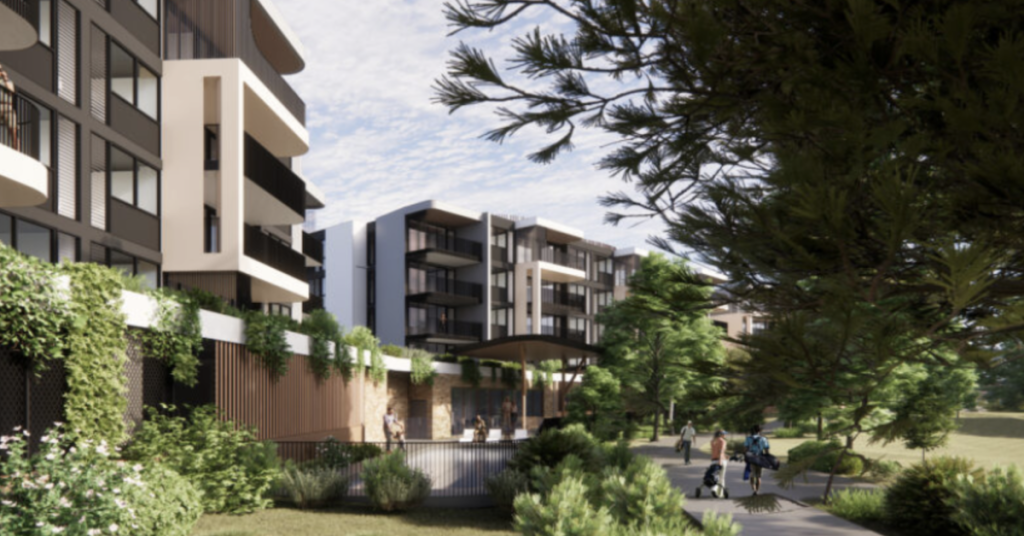
The Evelyn Mt Ommaney presents a quieter rhythm within the grounds of the McLeod Country Golf Club. Designed as a mix of apartments and townhouses, the community is positioned around green space, walking networks and visual openness. While golf forms part of the setting, the broader appeal lies in access to landscape, reduced noise and opportunities for gentle daily movement.
Why the operator behind the village — and the support model — matters
Across all retirement living options, one factor consistently shapes the long-term experience: the operating model behind the village. Clarity around costs, contracts and exit arrangements often matters just as much as design or location.
This is where Aura Holdings has carved out a distinctive position. Founded in 2016 by Tim Russell and Mark Taylor, Aura was established in response to a shift in what older Australians were asking for: connection, convenience and the ability to remain in established suburbs.
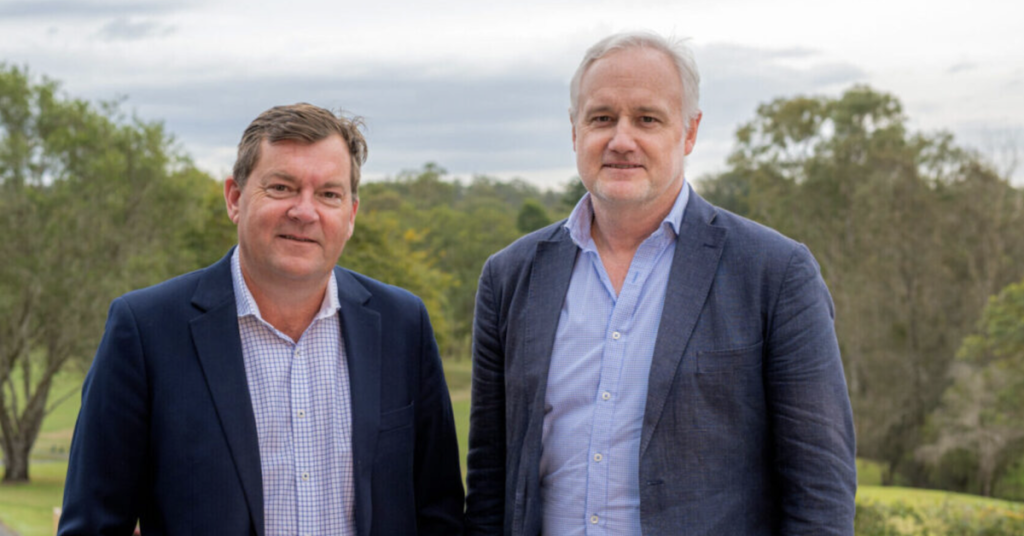
Drawing on decades of experience in the retirement sector, the founders moved away from large, broad-acre villages in favour of medium-rise, architect-led communities embedded in real neighbourhoods. Their guiding belief is straightforward but demanding: building luxury homes in in-fill areas, so residents can stay in the areas they know and love.
That philosophy increasingly extends beyond design into day-to-day support. Aura has recently introduced a dedicated Wellness Advisor role, appointing registered nurse Anya Rus to work across its Brisbane communities.
The Wellness Advisor helps residents navigate the government-funded aged care system — including My Aged Care registration, Commonwealth Home Support Programme services, and referrals for ACAT assessments — while remaining independent within their own homes.
The Wellness Advisor also assists residents in understanding recent aged care reforms and connects them with local health and wellbeing providers. In practical terms, the role functions as a knowledgeable, on-site advocate — someone who helps simplify what can otherwise be a complex and evolving system. For residents and families, that additional layer of professional support offers reassurance that guidance is available if, or when, it is needed.
Aura’s published framework also includes financial features designed to provide clarity:
- Residents do not pay stamp duty when moving into an Aura village.
- The Deferred Management Fee (DMF) is calculated on the exit sale price, not the original purchase price, and is capped at 33 per cent.
- On exit, residents are not charged refurbishment or sales and marketing costs, with those covered by Aura.
That long-term approach is reinforced by personal experience. Both founders have spoken publicly about having their own parents living within Aura communities — a perspective that informs how villages are managed and evolved over time.
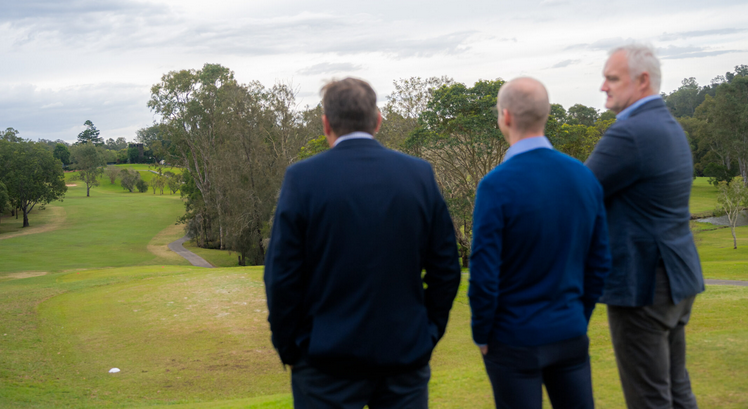
Rather than building and exiting, Aura positions itself as a long-term operator, remaining involved for the full lifecycle of each community and accountable for how it functions years after completion.
Preparing earlier creates choice later
Broader research into ageing in Australia also points to the importance of housing, health and social connection in later life.
Preparing for retirement living is not about rushing decisions. It is about creating options. When legal and medical arrangements are in place, downsizing is gradual, families are aligned, and housing choices are considered early, the next chapter is shaped by choice rather than pressure.
That preparation gives people the freedom to enjoy more of what matters — and the confidence to share the journey with family and friends, well informed and well supported.
Published 7-February-2026.
Aura Holdings is a Proud Promotional Partner of Brisbane Suburbs Online News.