



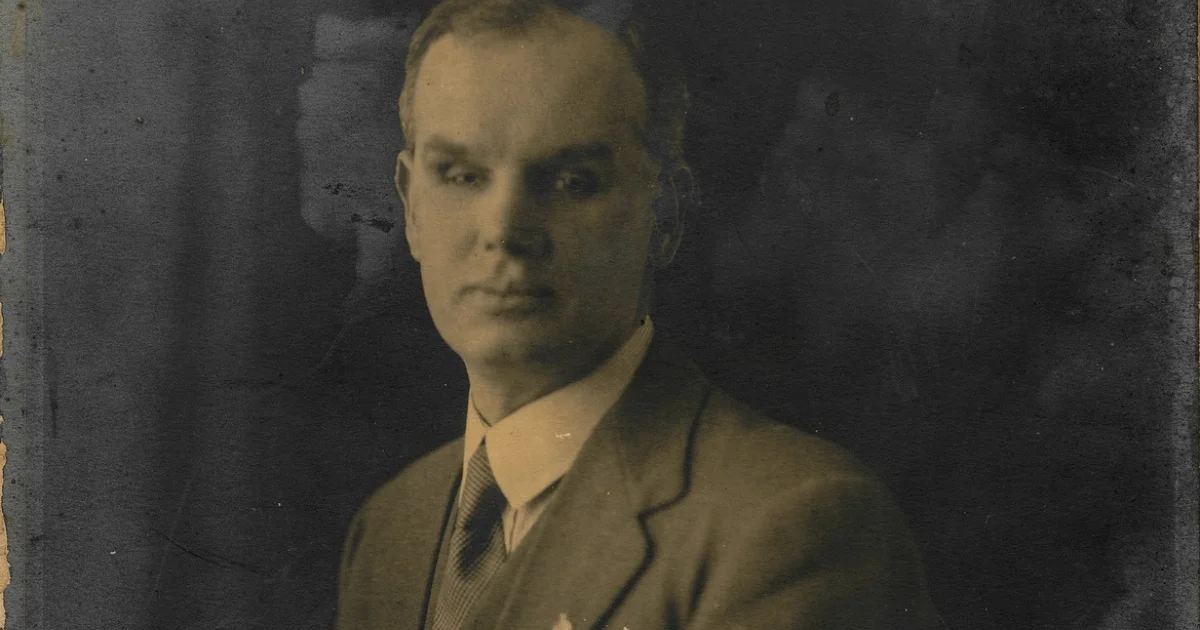
There is a war memorial in Graceville Memorial Park that has stood since November 1920. The man who unveiled it had lost both eyes and his right hand at Gallipoli five years earlier. His name was Edwin Maurice Little, and he had made Corinda his home.
Maurice, as he preferred to be known, was born in Barcaldine in 1893, the son of a Methodist minister. He attended Brisbane Grammar School from 1907 to 1909, captaining the First XI cricket team, before becoming a schoolteacher with the Department of Public Instruction. He was posted to Gladstone, and it was there that he enlisted on 16 September 1914, aged 21.
Read: Graceville Memorial Park Restoration on Track before Anzac Day

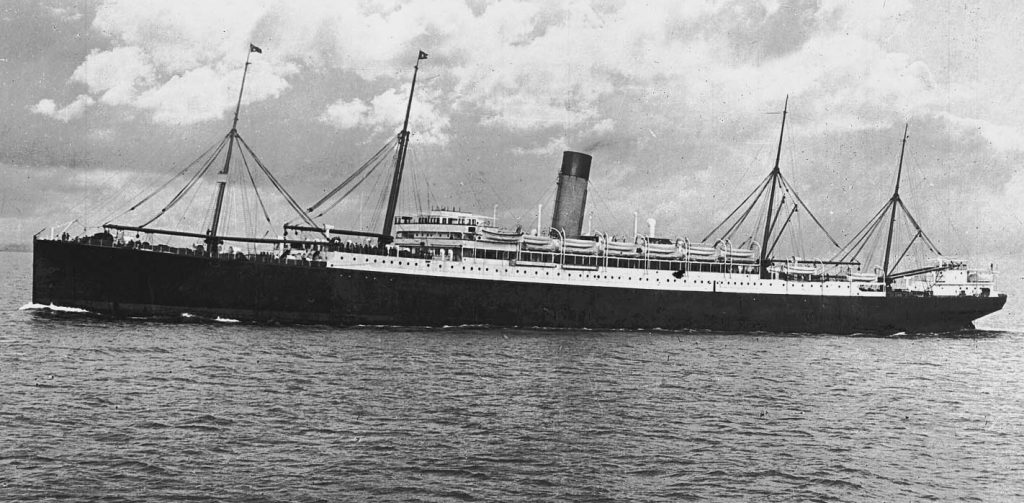
He was drafted into the 15th Infantry Battalion as a sergeant at Enoggera on 1 October 1914. The battalion, under the command of Lieutenant Colonel William “Bull” Cannan, joined Brigadier General John Monash’s 4th Brigade and embarked on the troopship Ceramic on 22 December 1914, bound for Egypt. After a period of training at Mena Camp near Cairo, the 4th Brigade embarked for Gallipoli on 12 April 1915.
The 15th Battalion landed at approximately 4:00pm on 25 April and moved up a narrow gully to the edge of an escarpment, establishing a defensive line at what would become known as Quinn’s Post, named after a captain in the battalion. It was the furthest point reached by the Australians on the first day and remained so throughout the campaign. The battalion garrisoned Quinn’s Post for the duration, sustaining continual casualties from sniping and bombs. Maurice was commissioned as a 2nd Lieutenant on 14 May to make up for the loss of officers.

On 26 May, a Turkish mine was exploded beneath the Anzac trenches at Quinn’s Post, and the Turks captured part of the trench system. Maurice and one other man attempted to hold back an enemy advance along a trench. Newspaper accounts from 1916, likely based on his own testimony, describe how he had been throwing Turkish bombs back before they exploded, doing so successfully six times before the seventh detonated in his hand.

On 29 May he was transferred to the hospital ship Gascon. At the Australian General Hospital at Heliopolis in Cairo, his right hand and wrist were amputated and both eyes were removed. He also sustained a severe wound to his left knee, which became infected.
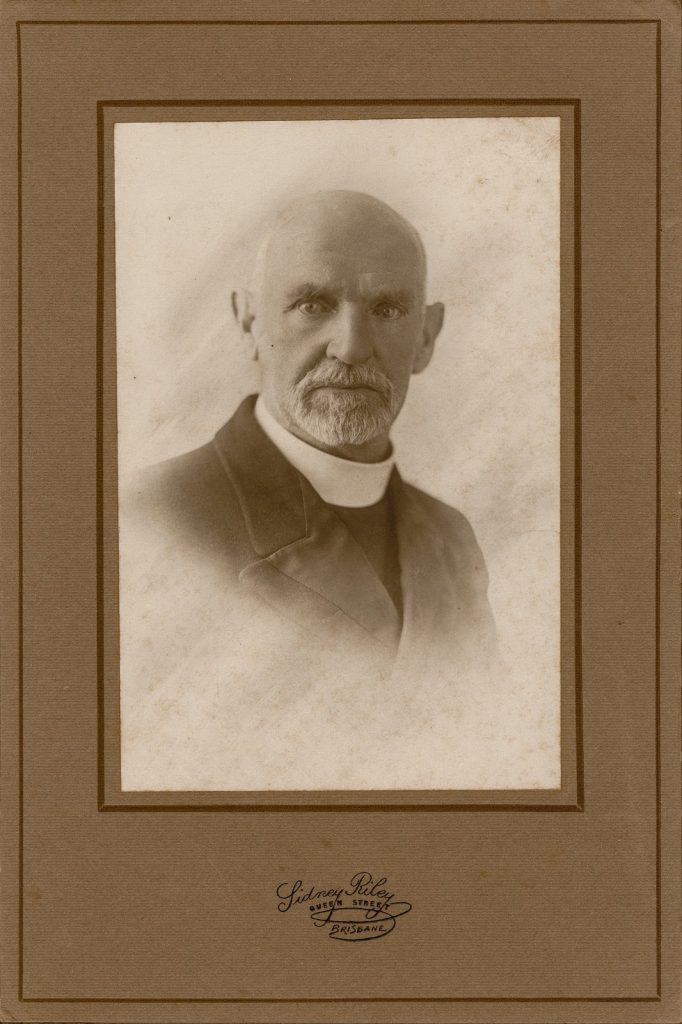
His father, the Reverend William Little, received a telegram advising that Maurice was wounded “not seriously.” A casualty list published in the press listed him as killed in action. According to researcher Ian Lang, whose account is published by the State Library of Queensland, the Reverend Little made his distress at the inaccurate reports known to his colleague, the Reverend William Brown of Sherwood.
Coming Home to Corinda
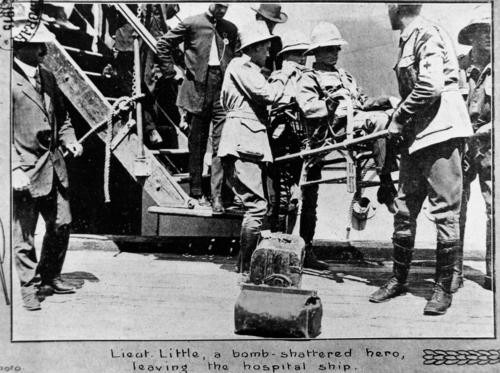
Maurice’s recovery at Heliopolis was aided by Lizzie Crowler, an English missionary who had spent twelve years working for the Church Home Mission in the Sudan and had come to Cairo on furlough, where she volunteered as a nurse. Maurice and Lizzie married in Cairo, with Maurice carried to the ceremony in a chair due to his knee injury. Lizzie was 22 years his senior.



The couple returned to Australia aboard the Kanowna in October 1915. A medical board in Brisbane discharged Maurice as medically unfit, noting the loss of both eyes, the amputation of his right hand, arthritis in his leg wound, hearing loss in his right ear and the loss of several teeth. He was granted a pension of 41 pounds a year, with Lizzie receiving 45 pounds a year as his primary carer.
Maurice mastered Braille while in Egypt with Lizzie’s assistance. The Bible Society donated all 29 volumes of the Braille Bible. He spoke at a public meeting in the Ipswich Town Hall, and stood unsuccessfully for State Parliament in the seat of Bremmer on a Nationalist ticket in 1918. He wrote regularly for publications including The Queenslander and authored an essay, Blindness Described From Within, published in the Maryborough Chronicle on 16 August 1920. In 1923, Queensland Book Depot published his Sonnets and Other Verses, with a preface by Mr. Bousfield, headmaster of Brisbane Grammar.
Read: Tennyson’s Barrett Adolescent School Officially Renamed Millenba, Meaning Place of Many Pathways
Maurice and Lizzie settled in Corinda. After the war, Maurice became the inaugural president of the Sherwood branch of the Returned Soldiers and Sailors Imperial League. On 29 November 1920, he unveiled the Sherwood Shire War Memorial at Graceville Memorial Park. His former battalion commander, Brigadier General Cannan, by then State president of the RSSAILA, was also present.
In 1925 the couple travelled to England, where Maurice studied economics at Oxford for three years. The couple later lived in Sydney for a time, where Maurice pursued a writing career. He died in Bromley, London, on 19 August 1938, aged 45.
Published 6-April-2026